Guide 02 · 6 min read
Cabinet Refacing vs Replacement in Scottsdale, AZ
Refacing wins when the cabinet boxes are sound and the layout stays put. Replacement wins when the boxes are water-swollen, the layout is wrong, or the doors have outlived a decade of desert heat.
01Good to know
The short answer
Refacing wraps the boxes you already own in new doors, drawer fronts, and veneer, and it costs less than a full replacement. It cannot fix a box that has been wet, and it cannot move a single cabinet. Replacement tears everything out and rebuilds, which is the only path when the layout or the appliances need the room to change.
The right call depends on the boxes, the layout, and what your appliances need. It does not depend on how the doors look today.
02Cabinets
Refacing: what it actually is
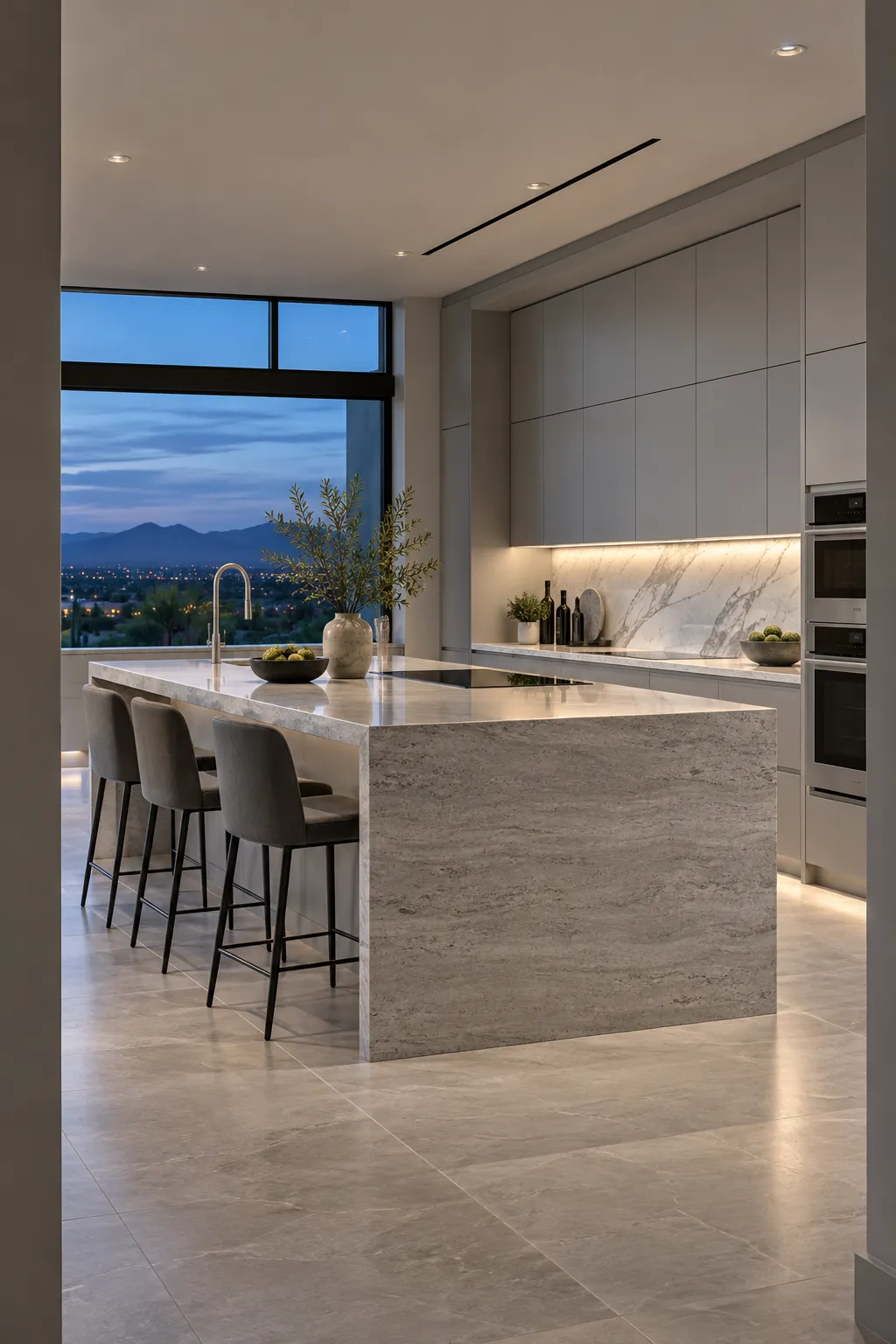
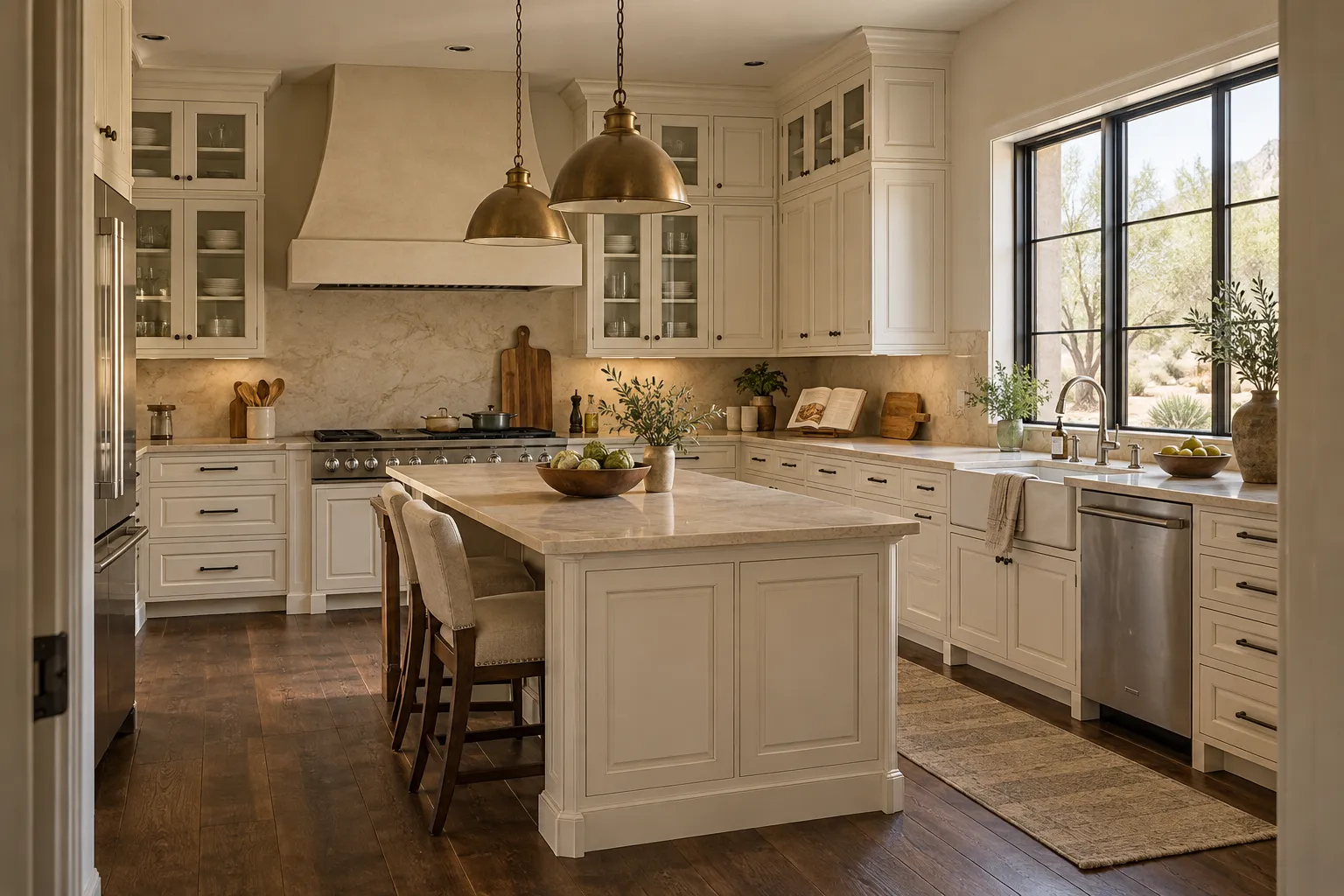
Refacing keeps the carcass, the box behind the door, and replaces everything you see. New doors and drawer fronts go on. The face frames get covered with veneer or rigid fronts. End panels get matched, hinges and pulls get swapped, and the kitchen reads as new. Nothing about the footprint changes. The sink stays in its cutout, the corners stay where they are, and the countertops usually stay in place.
The weak point is the box itself. Most boxes in Scottsdale kitchens are particle board, and particle board is a sponge once the laminate skin is broken. A sink base that dripped for two years under a hard-water faucet is the classic case. The door hides it. The box gives up a year later, and the new doors end up hanging on a carcass that is slowly losing its bottom.
A proper reface measures every door and drawer opening before the new fronts are ordered, then shims and adjusts the boxes so the reveals come out even. Skipped steps show up as doors that rub and drawers that catch. The work is fast compared to a replacement, but it is still a real job, not a sticker set. The finished reface should read as a new kitchen from six feet away. Up close, the tells are the box interiors you kept, and the same dead corner, and the same drawer that never held the right thing. That is the deal, and it is a good deal when the boxes are good.
03Good to know
Replacement: what it actually is
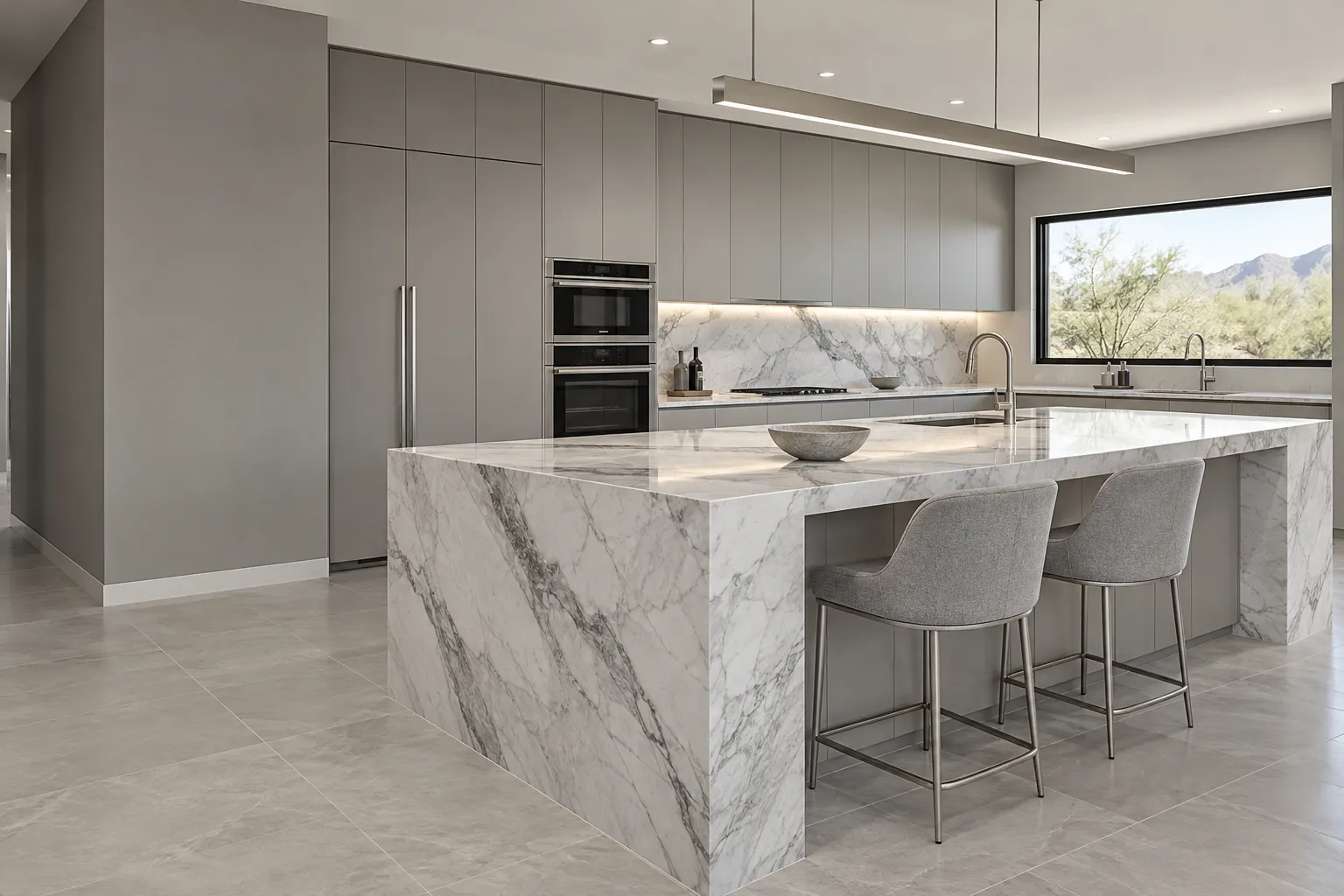
Replacement is a full tear-out. The old boxes come out, the walls get stripped back where needed, and new boxes go in, leveled and scribed to the floor. You pick the box material, plywood or particle board, then the doors, hinges, hardware, and interior fittings.
The real difference is what you get to change. Deeper boxes for a 48-inch range. Drawers instead of shelves in the bases. A sink that moves away from the dishwasher. An island where there was a dead corner. Replacement is a layout decision wearing a cabinet decision's clothes, and that is usually why it costs what it does. If the layout is what bothers you, read how a kitchen layout remodel actually works before you price doors.
Box material is the quiet decision. Plywood holds fasteners and shrugs off monsoon humidity spikes better than particle board, and it costs more for that reason. Particle board in a dry, well-built box is fine. The same board in a leak-prone sink base is not.
04Cabinets
Where refacing fails here
Dry air makes people trust their boxes more than they should. Dry does not mean dry under the sink. Scottsdale's hard water is hard on faucets, and a faucet that has dripped for years has fed water into the sink base. The face frame looks fine. The bottom of the box is swollen, and veneer over swollen particle board looks new for a year and then does not.
The other failure is what you keep. Replacing the faces on twenty-year-old boxes is fine until the box itself is the failed part, and in older Scottsdale homes the boxes are usually original to the house. Heat and UV through a south-facing window age laminate and the adhesive under veneer faster than the manufacturer's national average assumes. A reface over that is a refresh, not a fix, and the second job costs more than doing it once. If the boxes pass but the look is the problem, the paint vs stain question is the next decision.
One more Scottsdale twist: doors that face a south or west window line fade unevenly. Replacing only the fronts means the new doors start one shade and the end panels another, and the mismatch shows inside a year.
05Good to know
Where replacement fails here
The most common Scottsdale replacement regret is the layout left alone. A brand new kitchen dropped into the old footprint keeps the old walking problems. The fridge door opens into the island. The dishwasher blocks the sink when it is open. The same triangle that never worked keeps not working, only now with better doors.
Then there is appliance-first planning. The 48-inch range and the column fridge get bought before the boxes are sized, and nothing fits where it was supposed to. High-end appliance load means deeper boxes, wider cutouts, and more circuits, and the boxes have to be drawn around the appliances, not the other way.
An open-ended scope with no allowance list is how a replacement drifts. The number quoted in week one should be tied to a written spec, or it is not a number, it is a guess.
And if the new layout means moving a wall, Scottsdale's design review comes into play on the exterior. Approval comes before work, not after, and a wall that moved without sign-off is a wall that costs money twice.
06Costs
What it costs and what drives the number
Refacing runs a fraction of a full replacement, and the number moves with the door count, the finish, and whether you choose new doors or veneer over the old ones. A larger Scottsdale kitchen has more doors, so the gap narrows as the kitchen grows.
Replacement is driven by linear feet of boxes, the box material, the hardware, and the tear-out. Hardware alone can move a replacement number by hundreds of dollars, and nobody mentions it until the quote lands. Every wall that moves and every appliance that needs a bigger box adds to the number. None of it is a fixed price. It varies with the spec, and the spec should be written down before the first box gets ordered. For the full picture of where the money goes, start with what a kitchen remodel costs, or go back to the home page if you are still at the very beginning of the decision.
07Good to know
What good work looks like in Scottsdale
- The boxes get checked before anyone orders veneer. A door covering a failed box is a one-year fix.
- The boxes are sized to the appliances, not the appliances to the boxes.
- The HOA and design review position gets checked before a wall moves.
- The countertop gets templated after the cabinets are set, never before.
086 questions
Cabinet Refacing vs Replacement: your questions
Still have a question? Call (480) 672-2248 and describe the kitchen.
01Can I reface cabinets with particle board boxes?
If the boxes are dry and square, yes. Particle board that has never been wet takes veneer and new fronts fine. Particle board that has been wet will not hold the new skin for long, no matter what gets glued over it.
02How do I check my boxes for water damage?
Empty the sink base and press the bottom with your thumb. Soft spots, swollen edges, and dark water lines are the tells. Do the same under any cabinet that sits next to a dishwasher.
03Will refacing change my layout?
No. The footprint stays exactly as it is. If the layout is the problem, refacing spends money on the look and leaves the problem in place.
04Does replacing cabinets need HOA approval in Scottsdale?
Not for the cabinets themselves. If the new layout moves an exterior wall or changes an exterior opening, design review comes into it. Check before the wall comes out.
05Which holds up better in the desert heat?
New boxes with a stable finish hold up better than veneer over old ones. Heat and UV age adhesives and laminates faster here, and old boxes have already absorbed years of it.
06What does refacing cost compared to replacement?
It varies with the kitchen. Refacing usually lands well under replacement on a mid-size kitchen, and the gap closes on larger kitchens with more doors. Get the box inspection done first, because refacing a failed box is the most expensive option of all.