Service 02 of 07 · Scottsdale, AZ
Kitchen Cabinets in Scottsdale, AZ
Kitchen cabinets carry a large share of a Scottsdale kitchen's look and budget, and they are the part of the room you touch every day. This page covers the build types, refacing compared with replacement, materials and construction quality, storage and hardware, and the process from order to install; call (747) 244-3289 to talk through your kitchen.
- Last updated
01Cabinets
What is the difference between stock, semi-custom and custom cabinets?
Kitchen cabinets come in 3 build types, and the type moves the price more than anything else: stock, semi-custom and custom. Stock cabinets are built in fixed widths and depths and sold from inventory, the least expensive way to fill a wall at a published $100 to $300 per linear ft (Fixr). Semi-custom cabinets use standard boxes with more door styles, finishes and size options, at $150 to $650 per linear ft (Fixr). Custom cabinets are built to the room's actual dimensions, with any depth, height or interior layout, at $500 to $1,200 per linear ft (Fixr). The trade is flexibility against cost and time: custom fits odd walls and tall ceilings cleanly, while stock and semi-custom work when the room sits close to standard sizes. Published ranges are market figures, and the actual price is set after an on-site assessment.
02Costs
What does kitchen cabinet installation cost?
Fixr's 2026 data puts a kitchen cabinet installation project at a published $4,000 to $14,000, with an average of $7,000, and says labor is typically 30% to 50% of that total. A national cost survey's 2026 figures land in a similar place at $1,935 to $10,765, average $6,189, or $100 to $1,200 per linear ft. A full custom set is often priced as a package: Fixr puts custom cabinets, installed, for a 30 linear ft kitchen at $15,000 to $25,000, average $18,600. Installation work typically includes setting and leveling the boxes, shimming to the floor and walls, and fitting fillers, crown, doors, drawers and hardware. Plumbing, gas or electrical changes are separate trade work, and countertops are measured and made after the cabinets are set. Ranges are published market figures, and the actual price is set after an on-site assessment.
03Cabinets
Should you reface your cabinets or replace them?
Refacing keeps the cabinet boxes and replaces the doors, drawer fronts and visible surfaces, and it costs far less than new cabinets in most kitchens. Published refacing ranges run $3,000 to $13,500, average $8,250, or $100 to $450 per linear ft with an average of $275 (Fixr 2026 data); a national cost survey lands at $4,234 to $10,226, average $7,230. Replacement is a full cabinet install at the numbers above, and it is the only one of the two that can change the layout, add deep drawers, raise uppers or rework storage. If the boxes are solid and the layout works, refacing refreshes the room quickly and cleanly with less mess. If the layout is the problem, or the boxes carry water damage, replacement is the path that solves it.
04Cabinets
How do you judge cabinet materials and construction?
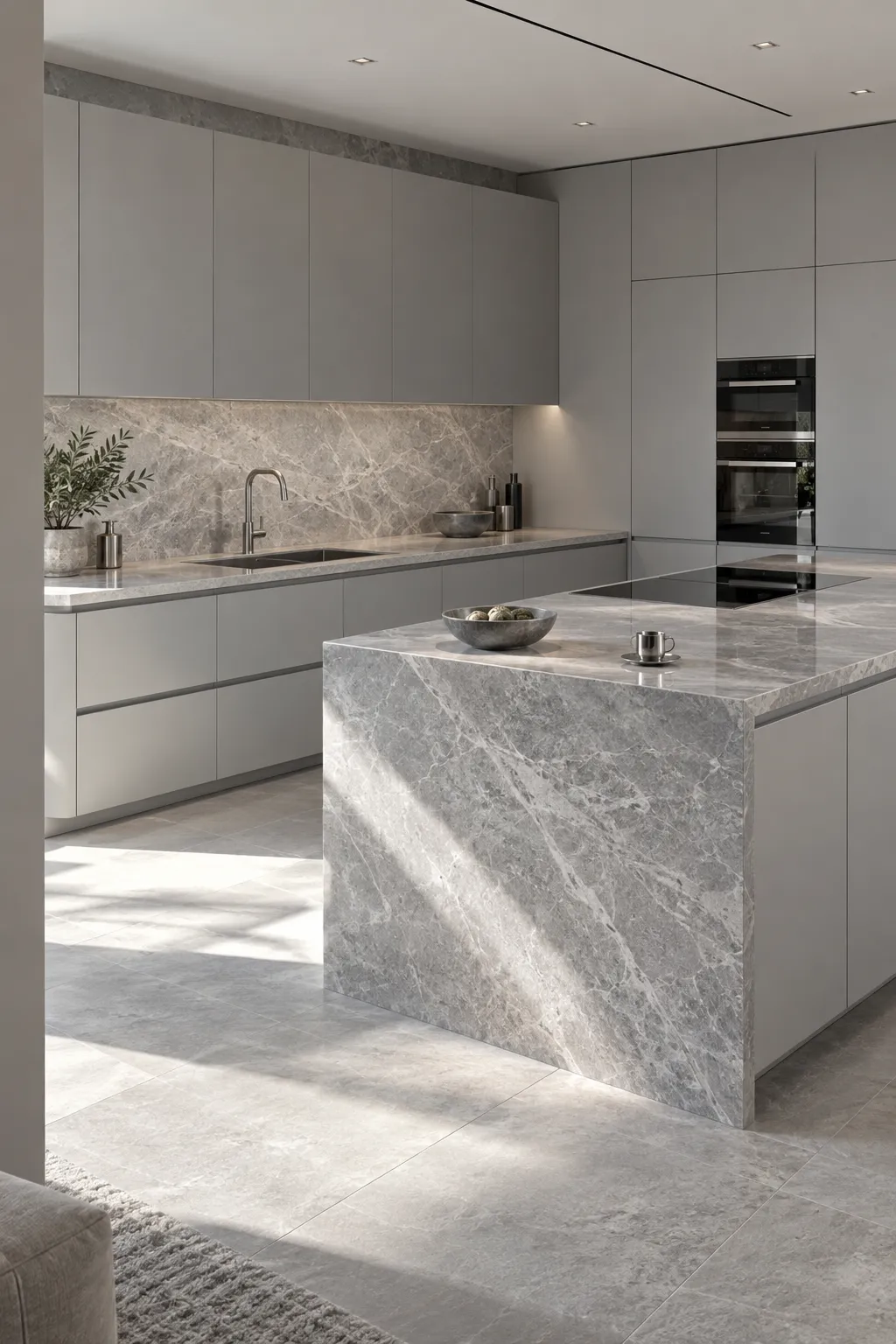
Construction quality is what separates cabinets that hold up to daily use from ones that sag, so the fastest filter is certification. The Kitchen Cabinet Manufacturers Association runs 3 programs: the A161.1 Quality Certification, where KCMA says certified cabinets pass 14 tests that include a 600-pound load test; the Environmental Stewardship Program; and Severe Use Certification, originally developed by HUD (KCMA certification (opens in a new tab)). KCMA says between 40% and 50% of cabinets fail their first certification attempt, and it lists certified companies, which makes the seal a quick way to sort brands. Past the seal, look at box construction, drawer glides, hinges and the factory finish system. If a spec sheet reads like a foreign language, call (747) 244-3289 with your questions.
05Cabinets
Should you worry about formaldehyde in new cabinets?
New cabinets can emit formaldehyde, and it is a fair question to ask before buying. Cabinet boxes, shelves and doors are often made with composite wood products, and the EPA sets formaldehyde emission standards for those products, with guidance for protecting families and for finding a third-party certifier (EPA formaldehyde hub (opens in a new tab)). In practice, look for the standard the manufacturer says its composite wood meets and who verifies it, stated for the exact line being bought and not for the brand in general. Ventilate the house while new materials settle, and keep the job's dust and debris under control while the kitchen goes back into use. If someone in the household has a specific health concern, keep it medical: check with a doctor and read the manufacturer's own safety information.
06Storage
How should storage and hardware be planned?
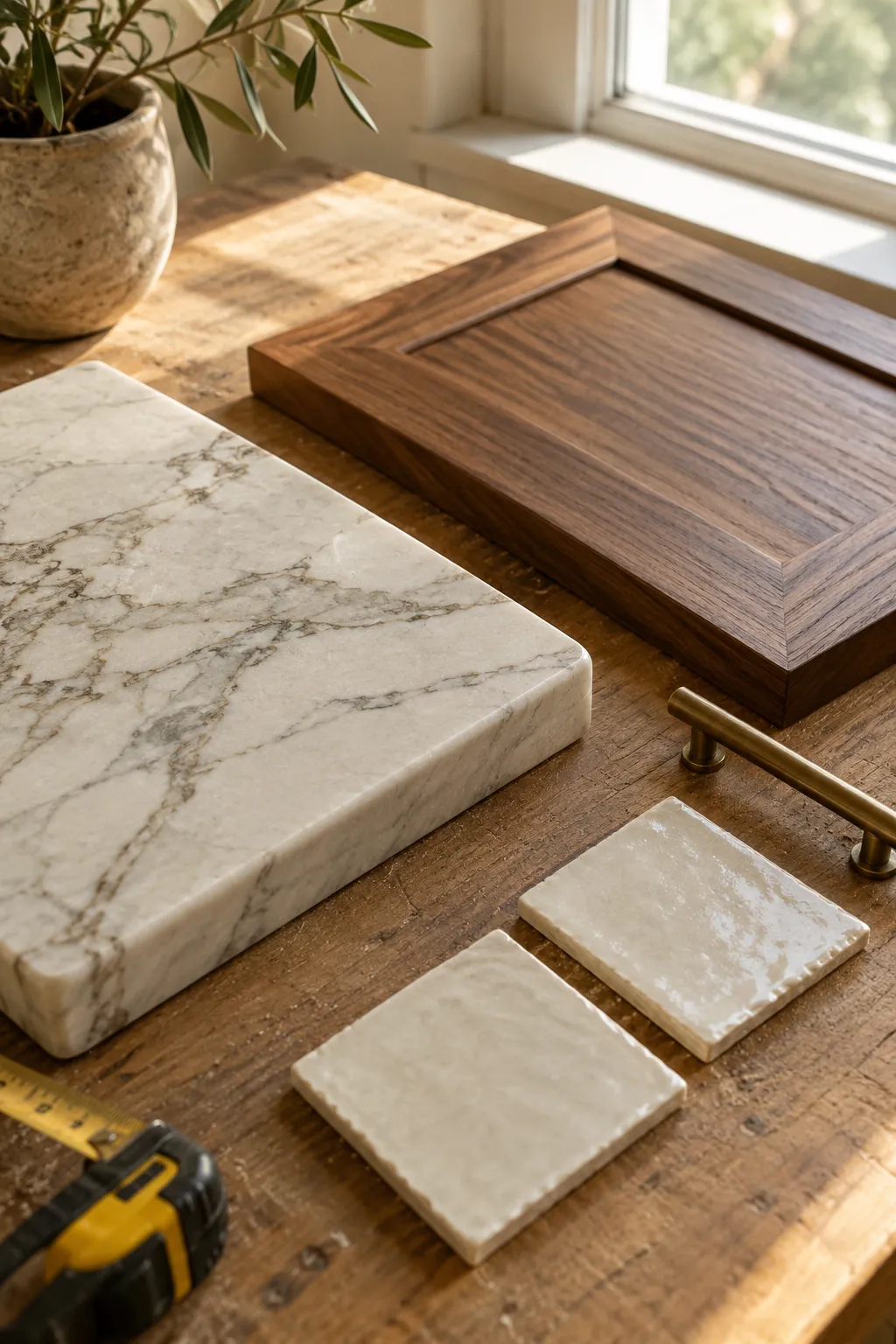
Storage is designed into the cabinet layout, not added later, which puts it in the same conversation as door style and finish. The basics that earn their cost: full-extension drawer glides so deep drawers open all the way, pull-out shelves in base cabinets, a waste and recycling pull-out, tray dividers, a dedicated microwave spot, and a pantry sized to what you actually store. Corner cabinets are the usual dead zone, and specific inserts make blind corners usable. Hardware matters daily: soft-close hinges and glides, handles sized to the doors and drawers they open. The kitchen storage page covers pantries, pull-outs and organizers in detail. Decide the internals before the order is placed, because changes after manufacturing are hard to make.
07Cabinets
What does the cabinet process look like, step by step?
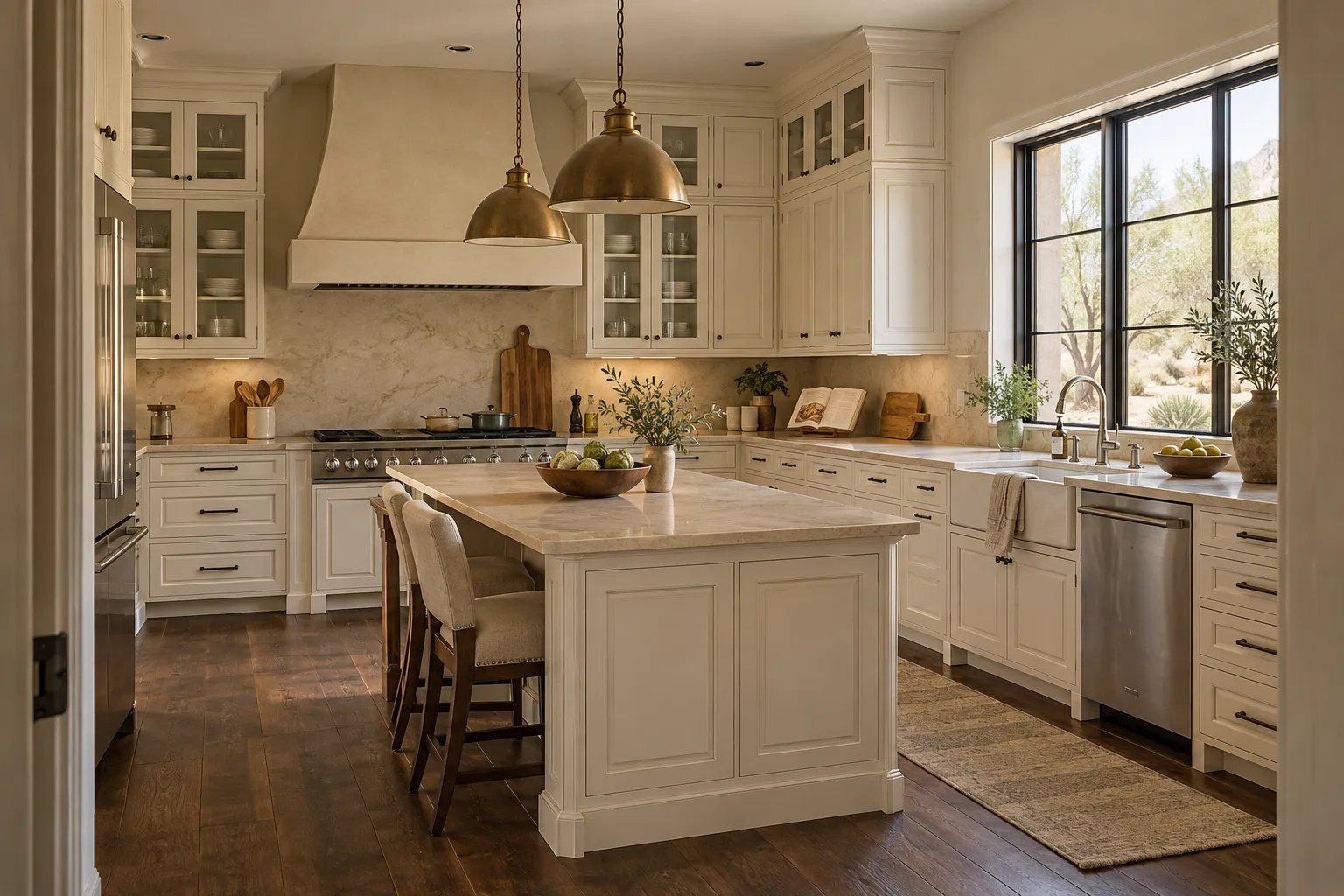
The sequence matters, because decisions made early show up late. It usually runs: measure the room and talk through what is not working; design the layout and choose door style, finish and internal storage; confirm the plan and place the cabinet order; prepare the room, including any electrical or plumbing rough-in, which falls under city permit rules; set the cabinets; template the countertops; then trim, hardware and final touches. The cabinet order sets the pace, since custom lines take longer to build than stock or semi-custom, and nothing ships before the plan is final. On permits, Scottsdale's guide lists cabinets and countertops among the work that generally does not need a permit, while single trade plumbing, electric, mechanical or demo work can need a Minimum Permit, and adding or moving those systems requires a permit, with plan review unless it is a Minimum Permit (City of Scottsdale (opens in a new tab)).
08Cabinets
What should you expect during cabinet installation?
Installation is the visible part of a long process, and it rewards a little preparation. Floors and anything staying get protected, old cabinets come out with dust control when replacement is in scope, and the new boxes are set, shimmed, leveled and secured, with fillers, crown and panels fitted before doors and drawers go on. Reconnecting appliances and fixtures that involve gas, plumbing or electrical is trade work covered by city permit rules, and any inspections are scheduled through the city. Expect noise, some dust, and a kitchen that is out of service for part of the job. Plan a temporary setup for coffee and meals, clear the work zone and the path to it, and expect some decisions to come up on site: adjustments, filler widths and clearance questions get settled as the work goes.
095 questions
Questions people ask
Still have a question?
Call and describe the kitchen. Calls are answered day and night.
Call (747) 244-328901How much do new kitchen cabinets cost in Scottsdale?
It depends on the tier: published ranges run $100 to $300 per linear ft for stock, $150 to $650 for semi-custom and $500 to $1,200 for custom (Fixr). A full cabinet installation project runs a published $4,000 to $14,000, and a 30 linear ft custom set, installed, runs $15,000 to $25,000. The actual price is set after an on-site assessment.
02Is refacing cheaper than replacing cabinets?
Almost always. Published refacing ranges run $3,000 to $13,500 with an average of $8,250 (Fixr), or $4,234 to $10,226 with an average of $7,230 (a national cost survey), against $4,000 to $14,000 for a new cabinet installation project. Refacing is the right call when the boxes and the layout are sound.
03Do cabinets need a permit in Scottsdale?
Cabinets on their own generally do not. Scottsdale's permit guide lists cabinets, countertops and similar millwork as work that generally does not need a permit. What can need one is the work around them: single trade plumbing or electrical may require a Minimum Permit, and adding or relocating those systems requires a permit, with plan review unless it is a Minimum Permit.
04How long does a cabinet project take?
The cabinet order sets the clock. Custom lines take longer to build than stock or semi-custom, and the schedule holds until the design is final. After delivery, installation and countertop templating are the parts that move fastest, though countertops add their own lead time. Lead time depends on the door style and finish; Fixr puts semi-custom cabinets at about 6 to 8 weeks and custom cabinets at about 10 to 12 weeks.
05What should you verify before buying cabinets?
2 checks are quick and worth making: a KCMA certification seal, which means the line passed independent tests, and what the manufacturer states about formaldehyde emissions for its composite wood, which the EPA regulates. Both should appear in the manufacturer's own documents, along with the care and safety information for the finishes you choose.
10Keep reading
Related
- All kitchen remodel services: the 7 service pages, from cabinets and counters to lighting and storage.
- Kitchen storage solutions: pantries, pull-outs and organizers that make new cabinets work harder.
- Kitchen islands: adding prep space, seating and storage to the room.
- Kitchen remodel cost guide: published cabinet and installation ranges with sources named.
- North Scottsdale: kitchen remodeling for DC Ranch, Grayhawk, Troon and nearby neighborhoods.