Service 06 of 07 · Scottsdale, AZ
Kitchen Lighting in Scottsdale, AZ
You cook in your own shadow. Tell us where it is dark, and someone from our team will call you back to plan the light.
What you get
Lighting placed where the work happens
Good kitchen light comes in layers: task light on the counters, ambient light on the room, accent light on what you want to show, with electrical work behind the walls to make it happen. Call (480) 672-2248 to talk through a plan for your kitchen.
- Task, ambient and accent light instead of one ceiling fixture
- Recessed lights, pendants and under-cabinet strips picked by what each one lights
- Wiring planned while the walls are open, so there is no cutting and patching later
- The range hood and its light planned with the rest
- Published prices per light and per run, with the source named
01How it works
Lighting project: 3 steps to get going
Tell us what you want to change
Use the form or call (480) 672-2248. You do not need a design or the right terms. Saying what annoys you about the kitchen is enough.
We call you back
We go over your project, your budget and your timing with you.
Your lighting gets planned
The layers, the fixtures and the wiring are settled first, then the project is priced in writing and put on the calendar, after an on-site look that sets the scope and the price.
02Timing
5 signs your kitchen lighting is falling short
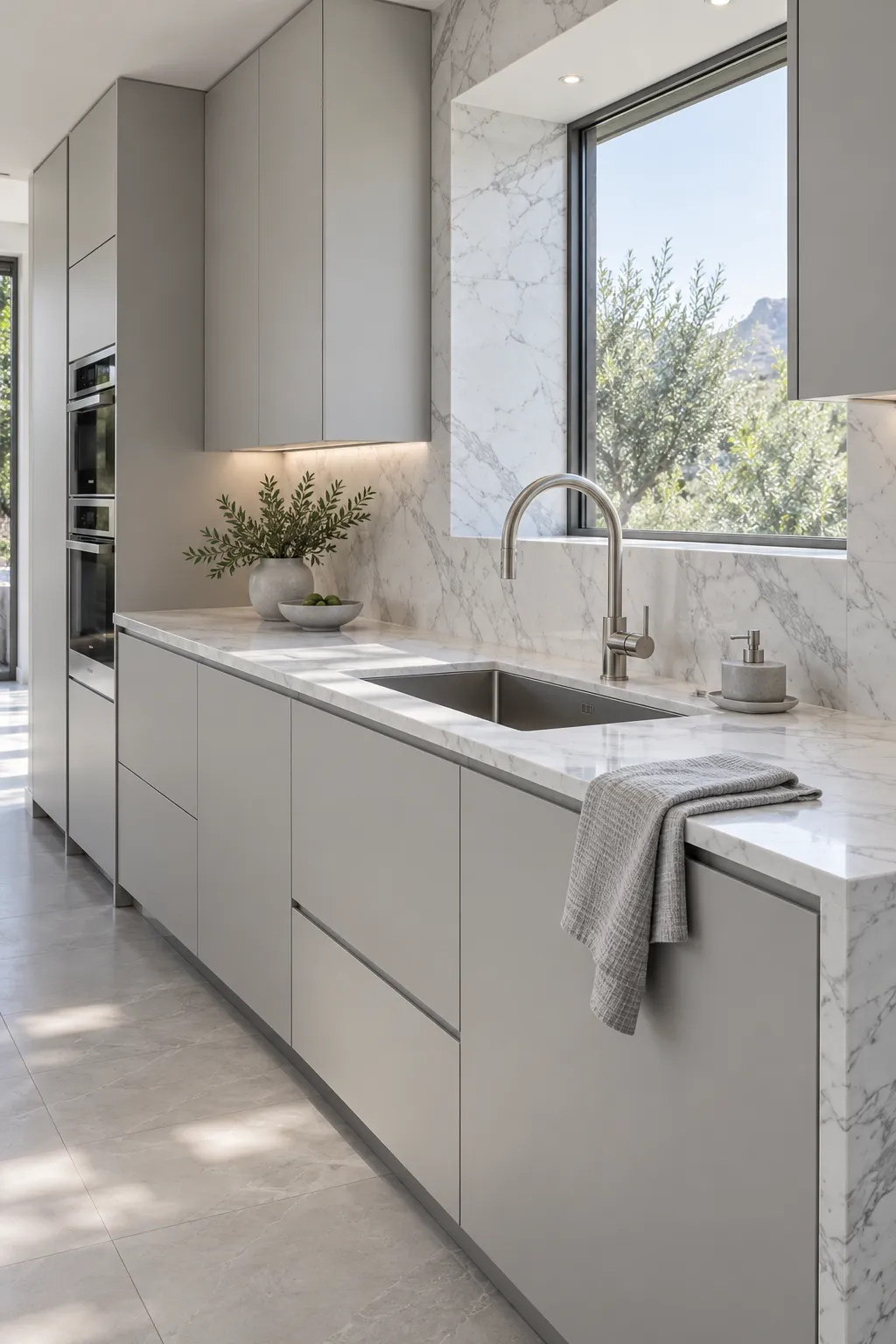
- 01One ceiling fixture and shadowed counters
- 02Your head shadows the cutting board
- 03The island sits in the dark
- 04A dark counter corner under the wall cabinets
- 05The room is hard to use before sunrise and after dark
Two or three of these? Get a call back.
03Costs
How much is a kitchen lighting upgrade in Scottsdale?
Recessed lighting is often the biggest line in a lighting budget: Fixr's recessed lighting guide lists $176 to $328 per light and about $1,467 for 6 lights. Another national cost guide puts professional under-cabinet lighting installation at $200 to $800, with LED strip lighting at $20 to $50 per linear ft. Pendants, dimmers and switching are priced inside the electrical scope once the plan is set. Those are published market ranges from named cost guides. The actual price is set after an on-site assessment, because access above the ceiling, the number of circuits and the condition of the existing wiring all move the number. Lighting added during a remodel usually costs less than the same work added later, when finished surfaces have to be opened and patched.
04Lighting
Which layers of light does a kitchen need?
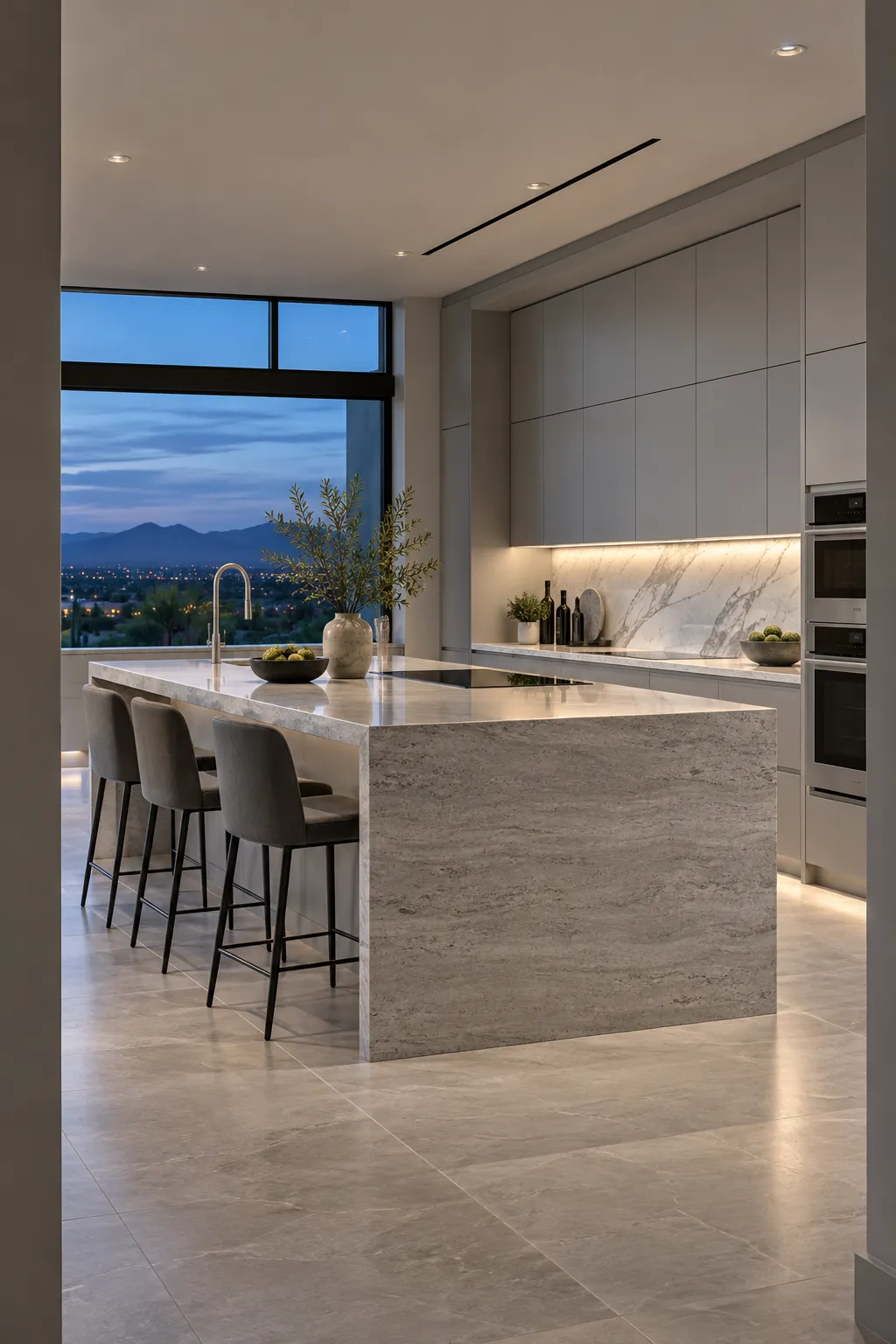
Kitchen lighting works in 3 layers, and good plans often use all 3: task, ambient and accent. Task light is aimed at the surfaces where you work, the counter runs, the sink and the range, so knife work and recipe reading are lit from overhead instead of from behind your head. Ambient light fills the room and keeps the whole kitchen usable before sunrise and after dark. Accent light adds depth to the things you want to look at: the inside of glass cabinets, a display shelf, the eating end of the room. The layers matter because a single ceiling fixture leaves the counters in shadow, especially under wall cabinets. Planned as a set, they also let you run one layer alone on a school morning and dim the whole room at night.
05Lighting
What fixtures show up in most lighting plans?
Plans often blend 4 fixture types, and the mix is what separates a bright room from a useful one.
- 01
Recessed lights
set into the ceiling over counters and walkways, carrying the ambient layer and much of the task light.
- 02
Pendants
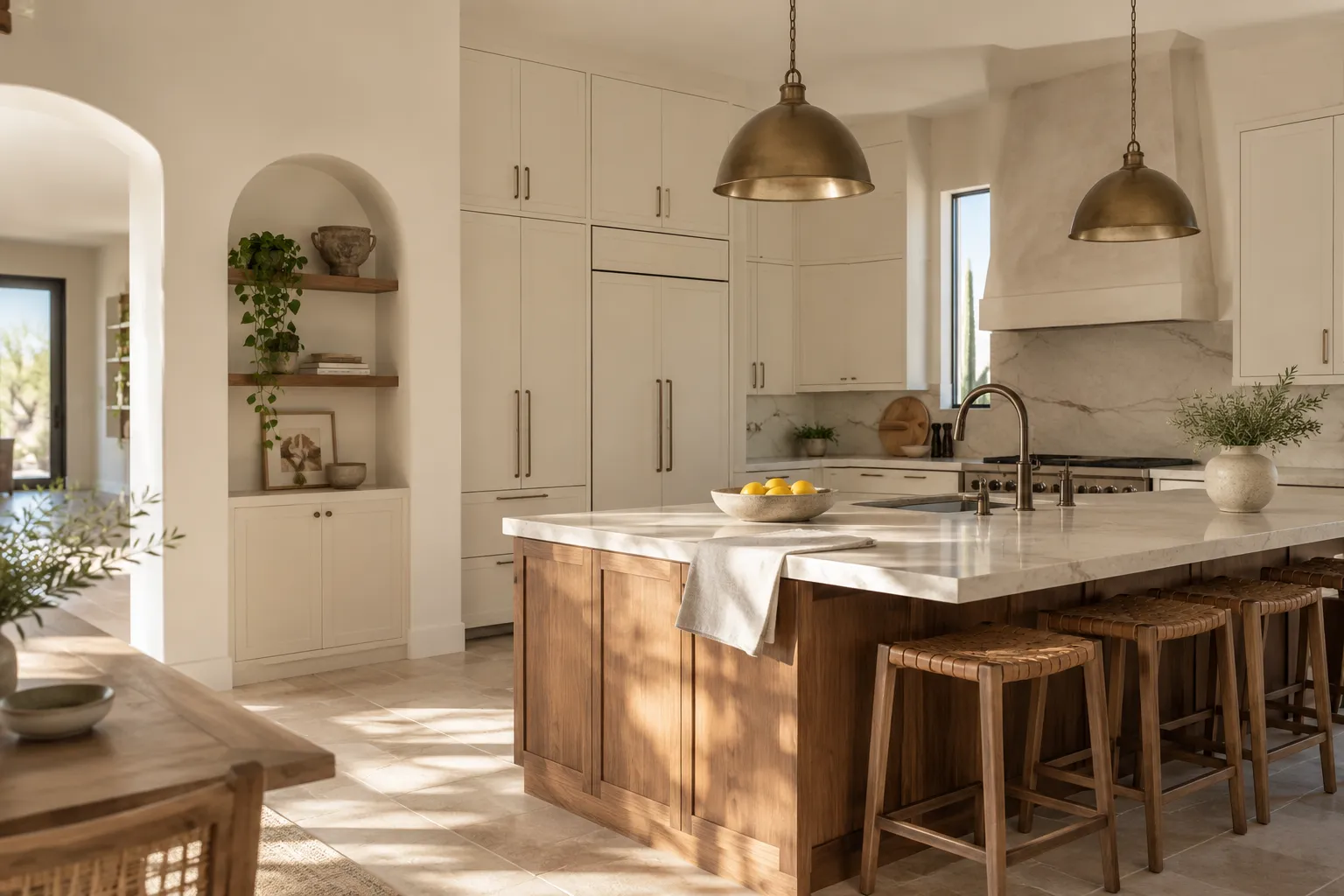
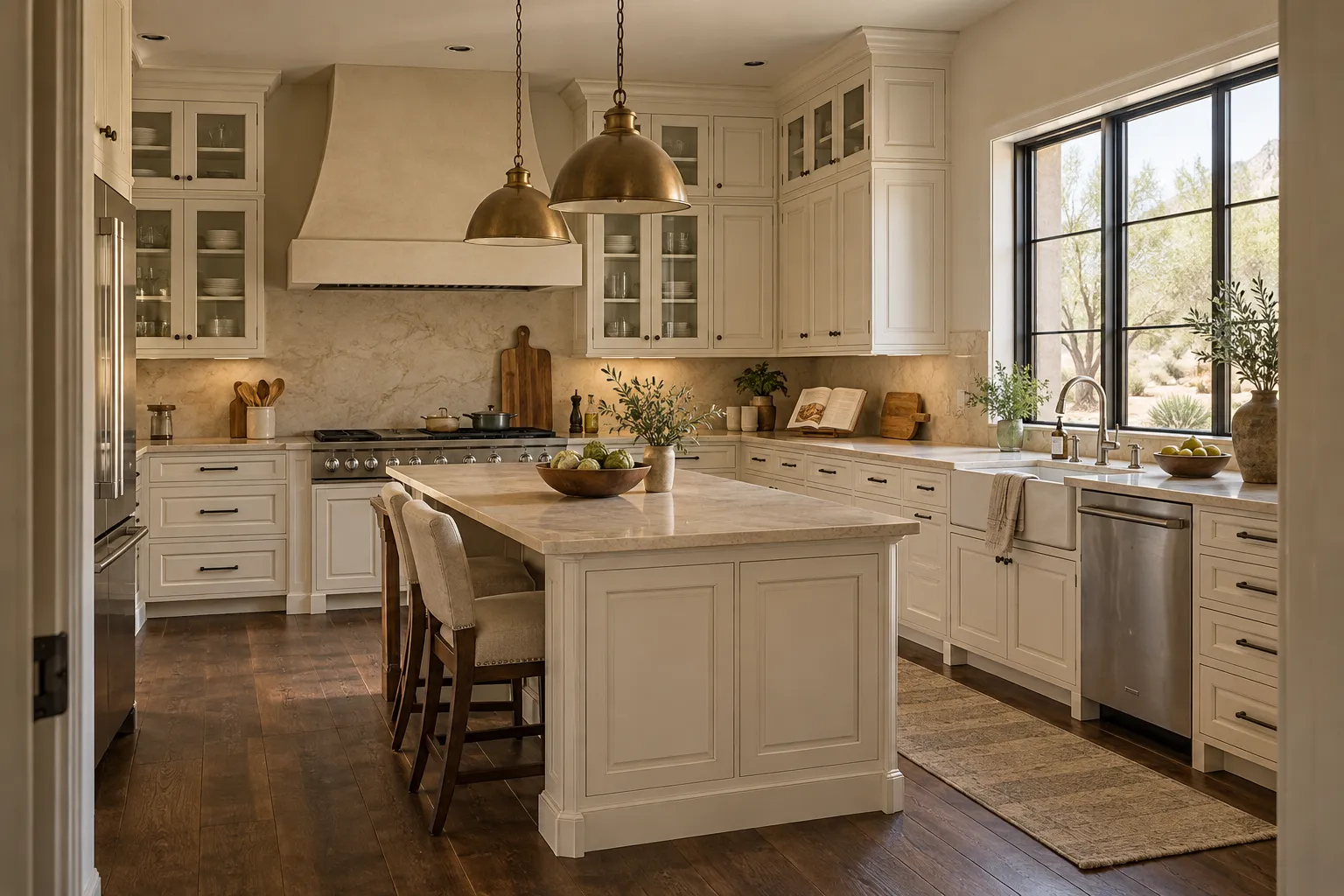
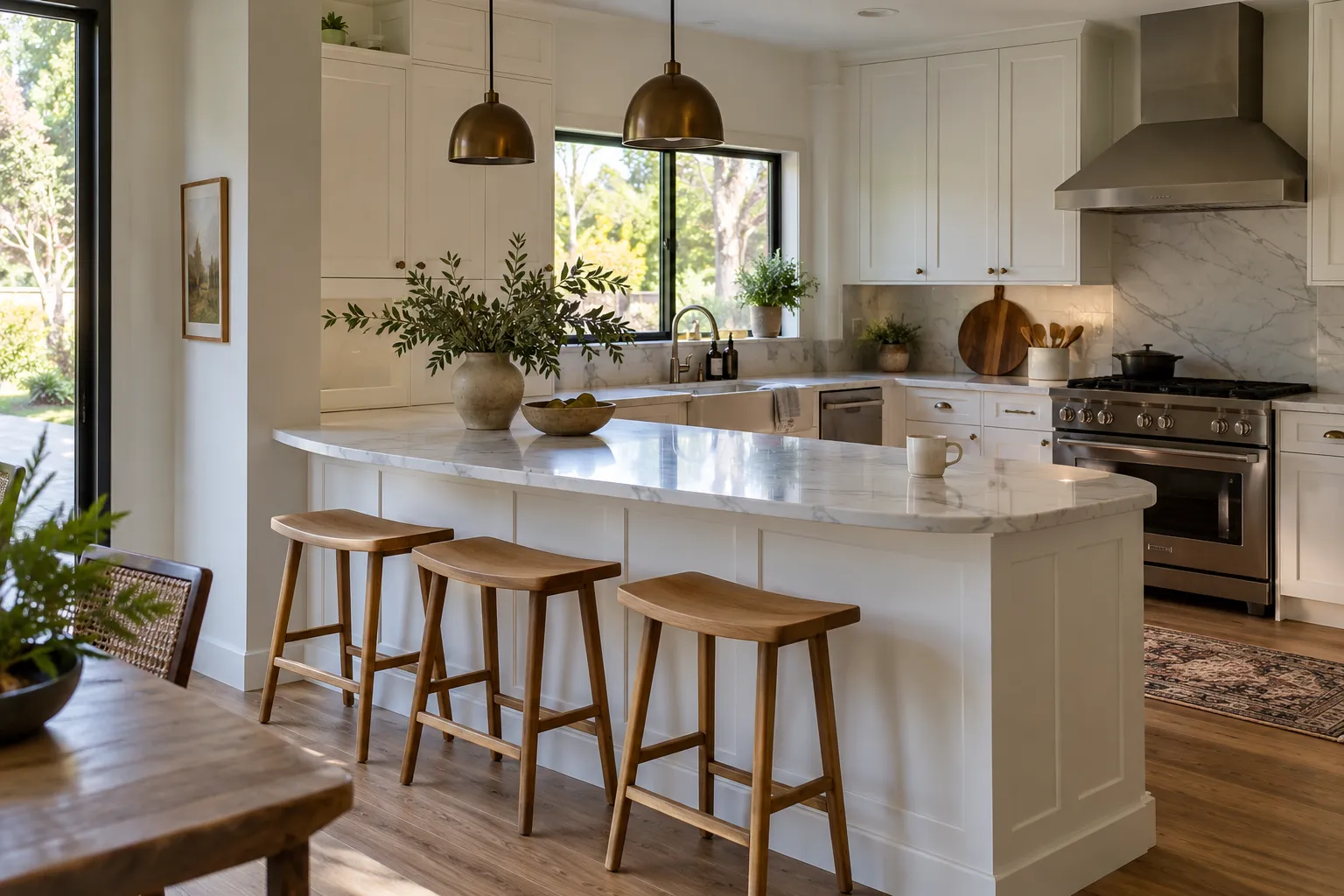
hung over an island, a peninsula or a sink, adding task light and a focal point.
- 03
Under-cabinet lights
a bright strip along the bottom of the upper cabinets, aimed down at the counter.
- 04
In-cabinet lights
small accent fixtures inside display cabinets and pantry towers.
The room's shape picks the mix. A kitchen with one long counter run needs recessed light first, an island asks for pendants, and a dark counter corner usually wants under-cabinet light. Fixture style comes last, after each light has a job.
06Lighting
Does switching to LED lower a kitchen's energy use?
LED products produce light up to 90% more efficiently than incandescent bulbs, according to ENERGY STAR (opens in a new tab), so the same brightness draws a fraction of the wattage. The other half of the story is how they age. LEDs dim slowly over time, a process called lumen depreciation, instead of burning out the way an old bulb does, so a kitchen runs a little dimmer after many years than it did when the lights were new. ENERGY STAR defines an LED's lifetime as the point where light output has dropped by 30 percent. ENERGY STAR certified LED products are tested for heat management, which helps keep light output steady through that rated life. For a kitchen with the lights on many hours a day, the efficiency can show up on the utility bill.
07Lighting
What electrical work comes with new kitchen lighting?
Lighting is electrical work: new circuits, dimmers, switch locations and wire runs. When a kitchen project adds or relocates electrical systems, the City of Scottsdale requires a permit. Adding or altering a circuit is listed as a Minimum Permit project, which does not go through plan review. Safety gear rides on the same wiring. The Electrical Safety Foundation (opens in a new tab) says countertop appliances belong on GFCI-protected outlets and away from the sink, and that these outlets should be tested monthly. If the kitchen has not been updated in decades, a lighting plan is a natural moment to look at how the countertop outlets are protected. What the code requires in your house is decided by the city after review. Call (480) 672-2248 to talk through the scope for your kitchen.
08Layout
Why decide on lighting before the walls are closed?
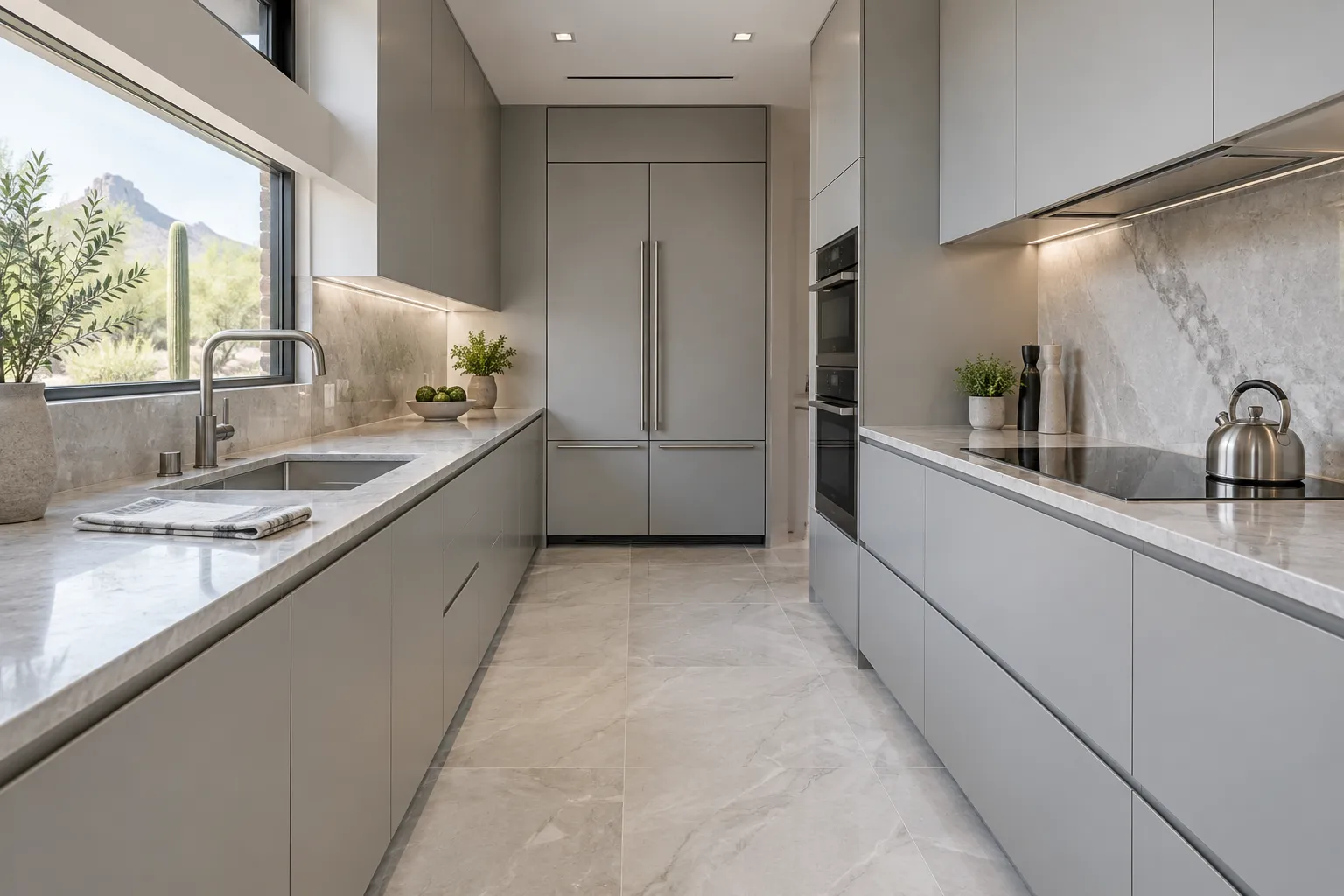
Because the wiring lives inside the walls, and everything about the job is easier while they are open. Rough-in work, the boxes, cable and switch legs that feed each fixture, happens before insulation and drywall, so a lighting plan drawn during design adds little to the work. Deciding fixture locations after drywall means cutting, patching and repainting, and a patched ceiling can be hard to match. Early decisions also let the rest of the project account for light: the pendant box over the island, the driver for the under-cabinet strip, the depth for a dimmer stack. Cabinets and lighting belong on the same page, because under-cabinet and in-cabinet runs are wired when the boxes go in.
09Lighting
Do the range hood and vent fan belong in the lighting plan?
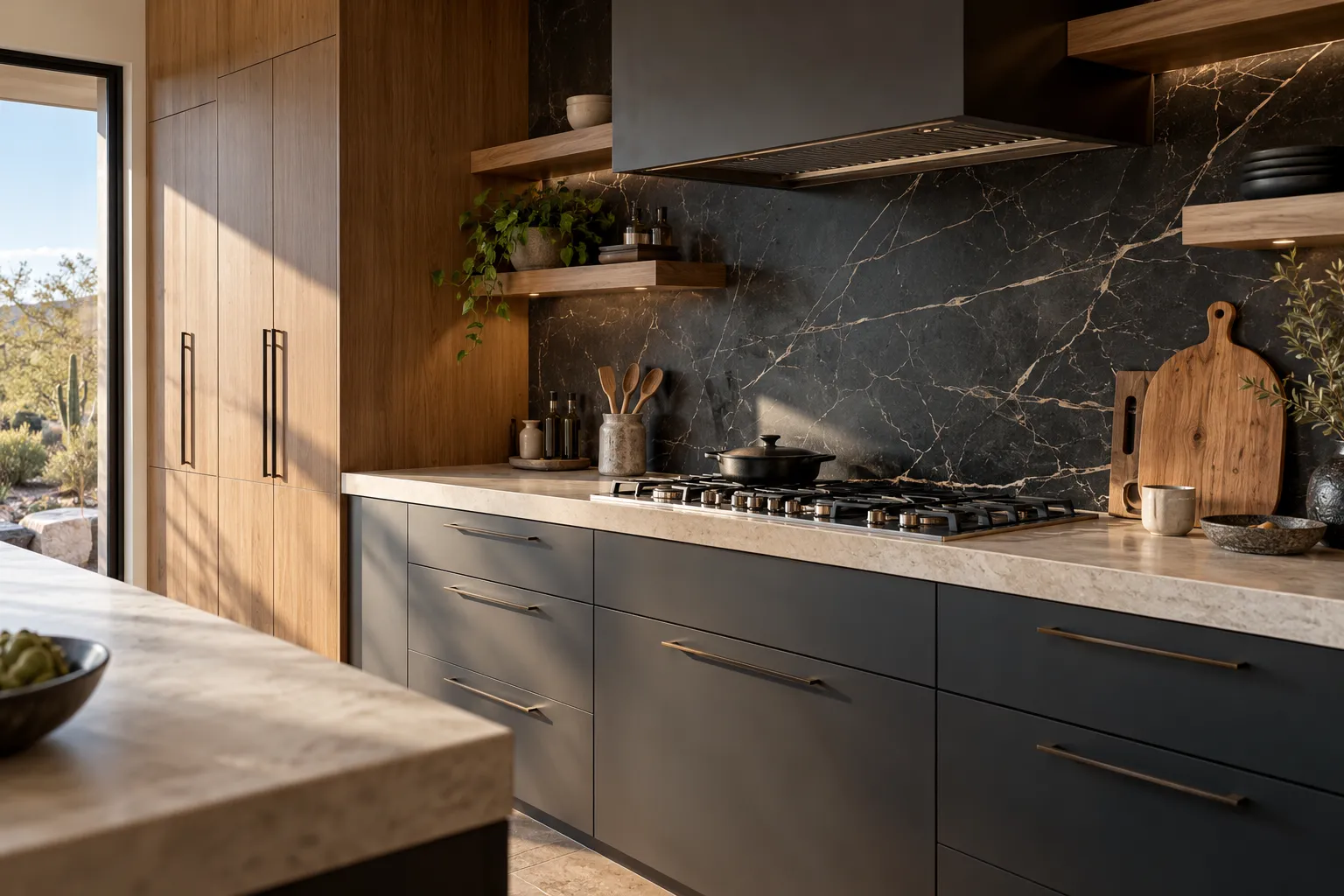
Yes, and it is easy to miss because the hood is bought as an appliance. Many hoods carry their own light over the range, so the hood choice sets that light, and the fan needs its own electrical path. ENERGY STAR certifies ventilation fans (opens in a new tab) that use about 48% less energy than standard models, and about 70% less for models that include lighting, with sound level and airflow requirements built into the label. Ventilation also moves moisture and cooking odors out of the room, which counts in a kitchen that stays closed up through an Arizona summer. Settle the hood early, and the cabinet above it, the duct run and the wiring get planned as one piece instead of three.
10Lighting
Can you change the lighting without remodeling everything?
Yes, within limits. A lighting-only project can replace fixtures, add under-cabinet strips and move switches, but it still needs ceiling access and drywall repair wherever new cable runs. The mess is smaller than a remodel's and the price is smaller too. The catch is placement: light installed before a kitchen's layout settles can end up in the wrong spot once the range or the sink moves, which is why a layout remodel and its lighting belong in the same conversation. If new cabinets are coming, the under-cabinet and in-cabinet wiring goes in with them. If not, a ceiling patch and a fresh coat of paint is the whole disruption. Either way, the plan comes first and the fixtures follow it.
11Lighting
Why do some Scottsdale kitchens need more from their lighting?
There are 2 local reasons. First, this is a hard-sun climate: Phoenix averages 111 days a year at or above 100 degrees (National Weather Service, 1991 to 2020 (opens in a new tab)), and electric light carries the room before sunrise and after dark. Second, hillside and view lots, such as those in Fountain Hills, sit in light that changes through the day, and layered light smooths those swings better than a single source can. Flat-lot kitchens can often manage with less; view kitchens may need more. The Fountain Hills page covers how those hillside and view lots shape a project, from where the windows land to the light layers that follow. The practical takeaway is the same in both cases: plan layers, not fixtures, and the room works at 6 in the morning and at 9 at night. The desert kitchen design guide covers light, heat and finishes in Arizona kitchens.
125 questions
Lighting questions worth asking
Still have a question? Call (480) 672-2248 and describe the kitchen.
01How many recessed lights does a kitchen need?
There is no fixed number. It depends on the ceiling height, the fixture output and the length of the counter runs. Fixr's guide prices recessed lighting per light, at $176 to $328, and about $1,467 for 6 lights, which gives a sense of scale for a mid-size kitchen. A lighting plan sets the final count after the layout is drawn.
02Do kitchen lighting changes need a permit?
It depends on the scope, and the city decides after review. Replacing a fixture in an existing location is not the same as adding a circuit or moving a switch. Adding or relocating electrical systems requires a permit from the City of Scottsdale, and adding or altering a circuit is a Minimum Permit project without plan review.
03Are LED strip lights good for under-cabinet lighting?
They are a common choice today. Another national cost guide puts professional under-cabinet lighting installation at $200 to $800, with LED strip lighting at $20 to $50 per linear ft. Plan the run so the strip hides behind a light rail or inside a recess, and leave the driver somewhere reachable so service later does not mean opening a wall.
04How long do LED kitchen lights last?
LEDs do not burn out the way incandescent bulbs do. ENERGY STAR explains that they dim over time instead, a process called lumen depreciation. Over many years a kitchen gets a little dimmer. Certified products are tested for heat management, which helps keep light output steady through the rated life.
05Does a kitchen need in-cabinet lighting?
It is optional, and it changes a room more than people expect. In-cabinet fixtures turn glass-front cabinets and display shelves into a feature, and they work as quiet light when the main layers are off. Plans often add them after task and ambient light are budgeted, because they serve the accent layer.
13Keep reading
- Kitchen remodel services: every service page for a Scottsdale kitchen in one place.
- Kitchen layout remodels: how a new layout moves light, wiring and switch locations.
- Kitchen islands: island size, seating and the pendants that hang over them.
- Kitchen remodel costs: published lighting, cabinet and full remodel ranges with sources.
- Kitchen remodeling in Fountain Hills: hillside and view lots where light changes through the day.
- Paint vs Stain Cabinets in Scottsdale:
- Shaker vs Flat Panel Cabinets in Scottsdale: