Guide 03 · 5 min read
Induction vs Gas Cooktop in Scottsdale, AZ
Induction heats the pan with a magnetic field, needs 240-volt power, and only works with magnetic cookware. Gas burns a flame, needs a supply line and real outside venting, and gives you heat you can see. The right pick depends on your panel, your pans, and where the hood can vent.
01Good to know
The short answer
Pick induction if your panel has capacity, you own or are willing to buy magnetic pans, and you want the heat out of the kitchen during a Scottsdale summer. Pick gas if you already have gas at the wall, you want the flame you can see, and you will run a hood that actually vents outside. The bigger the cooktop, the more the power and the venting questions decide the outcome, not the brand brochure.
The right choice depends on the electrical panel, the gas line, and the venting path in your kitchen.

02Good to know
Induction: what it actually is
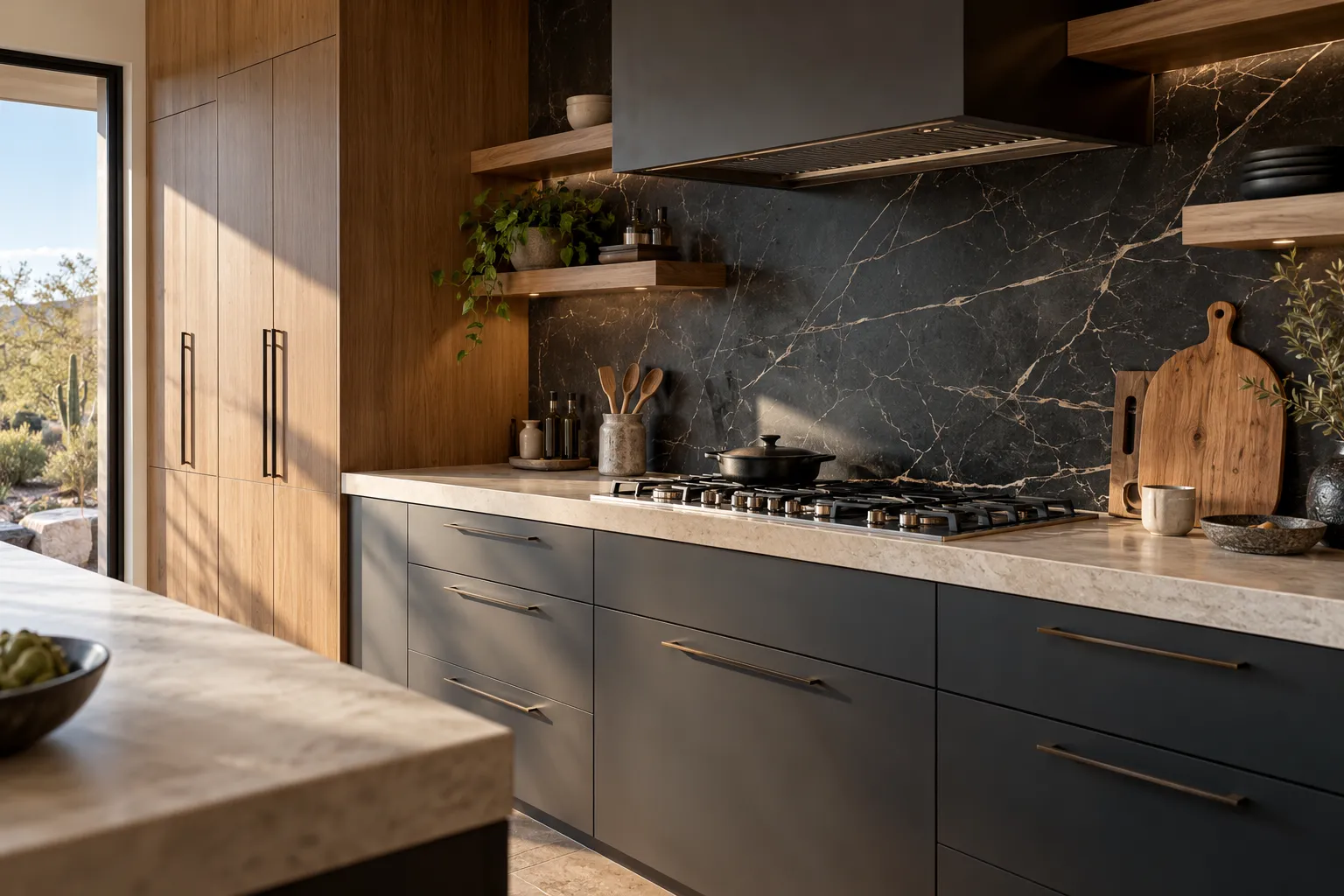
Induction does not heat glass and then the pan. A copper coil under the glass cooktop creates an oscillating magnetic field, and the pan itself becomes the heating element. The pan gets hot, the surface around it stays far cooler, and the response is instant. Turn the power down and the boil drops now, not ten seconds from now.
The catch is the cookware. The pan has to be magnetic: cast iron, carbon steel, and most clad stainless pass the magnet test. Bare aluminum and copper do not, and neither do some cheap nonstick pans. The pan check matters more than people admit, because the cooktop only works as well as the pan sitting on it, and a warped-bottom pan sits half off the field. The second catch is power. Induction runs on a 240-volt dedicated circuit, and a 36- or 48-inch cooktop draws real current. The circuit has to be sized to the cooktop before it ships.
03Good to know
Gas: what it actually is
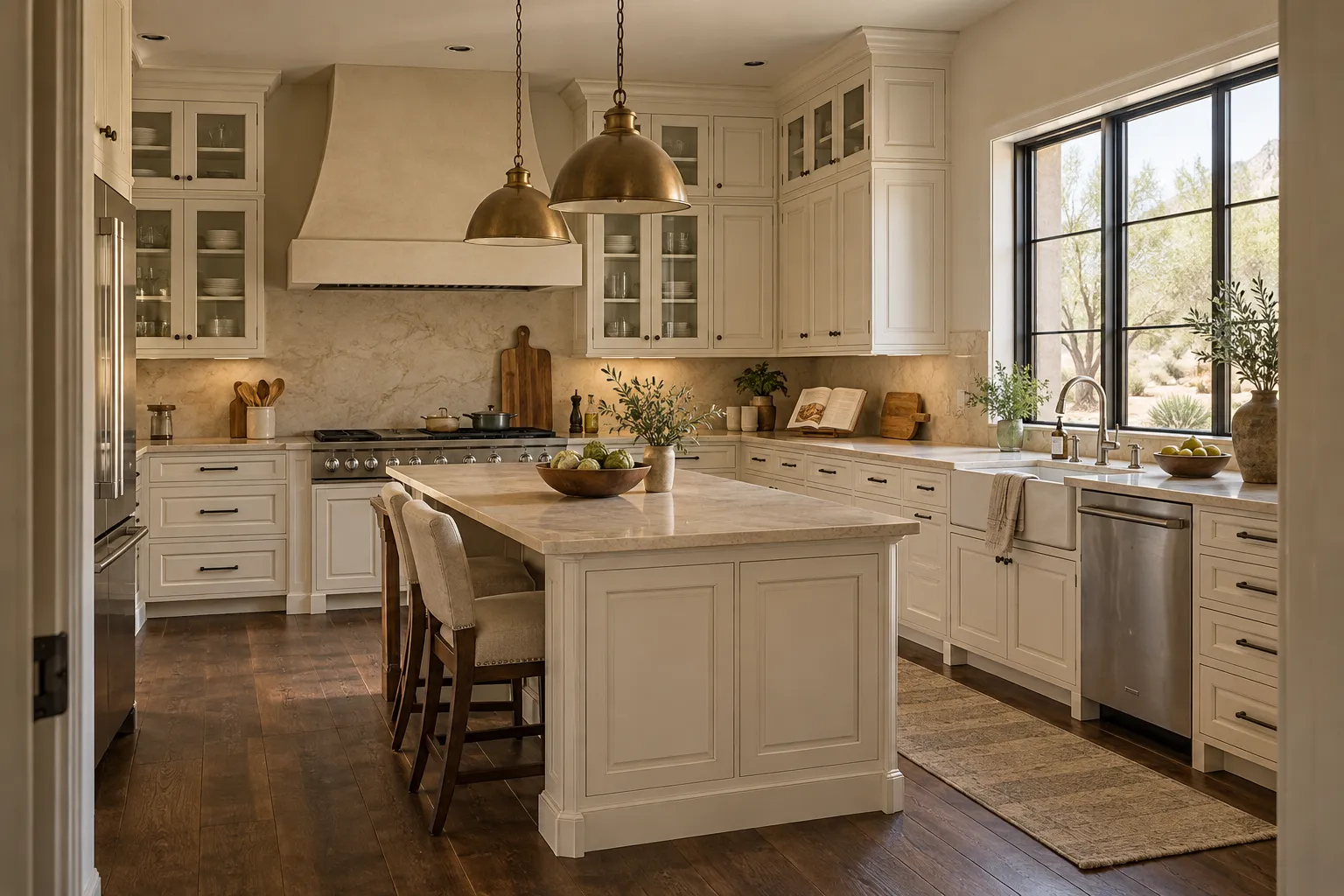
Gas burns a flame, and the flame is the whole point. You can see the heat, tilt a pan over it, and run a wok the way a wok wants to run. The power comes from the burner, measured in BTUs, and the cooktop itself plugs into a plain 120-volt outlet. The gas is the fuel, not the electricity.
Gas also brings two obligations. The line has to exist at the wall, which it does in many Scottsdale homes and does not in others. And the combustion has to go somewhere. A hood over a gas cooktop has to pull to the outside. A recirculating hood over gas is moving smoke around the kitchen, not venting it, and a range that burns real gas deserves real exhaust. In a tight, well-sealed house, the exhaust also has to pull replacement air from somewhere, and that make-up air is part of the venting plan, not an afterthought.
04Good to know
Where induction fails here
The panel is the usual failure. Scottsdale kitchens run a high-end appliance load, and a big induction cooktop draws more than the old cooktop it replaces. In an older home, the panel may be tapped out, the wire run to the kitchen may be undersized, and the cooktop gets bought before anyone checks. That is appliance-first planning in its purest form: a beautiful box in the garage and no circuit to feed it.
The pans are the second failure, and it shows up on install day. A drawer full of aluminum and copper pans means a second shopping trip, and good magnetic cookware is part of the real cost. The third is the surface itself. Induction glass is tough but it is glass, and a dropped cast iron skillet can crack it. The repair is a cooktop replacement, not a touch-up. If the cooktop might sit on the island, read kitchen island vs peninsula first, because an island cooktop changes the venting question all over again.

05Good to know
Where gas fails here
The line is the first question. If the house was built without gas, or the meter is on the wrong side of the kitchen, running a line is its own line item, and in a slab home the routing gets interesting. The second question is the vent. A hood that recirculates over a gas range is not venting anything outside, and the moisture, the heat, and the combustion air all stay in the kitchen. Monsoon humidity makes it worse: a recirculating hood in July is recycling wet, greasy air right back at the cabinets.
The third question is the exterior. If the hood vents through a wall the HOA can see, the outlet cap is an exterior change, and Scottsdale design review cares about exterior changes. Check before the hole gets cut, not after. The outlet cap and the duct run are the parts nobody prices until the hood is already on the wall.
And the honest seasonal one: a gas flame dumps heat into the kitchen you are paying to cool. In August, that is a real cost, not a talking point.
06Costs
What it costs and what drives the number
The cooktop is rarely the whole number. Induction means the appliance plus the 240-volt circuit, and a panel upgrade if the panel cannot carry it. Gas means the appliance plus the line run if there is no line, plus the hood and the exterior vent run. Both vary with the kitchen, and the appliance price is only the part you can see online. See what a kitchen remodel costs for how the rough-in line items add up, and read the order of work if you want the sequence that keeps the trades from colliding. If you are still early in the decision, start from the home page and work through the comparison in order.
07Good to know
What good work looks like in Scottsdale
- The panel gets checked before the cooktop gets bought, not after it arrives.
- The circuit is sized to the cooktop, never the cooktop to the circuit.
- The vent route is planned before the hood ships, so the exhaust actually leaves the house.
- The design review position gets checked when the vent exits a visible wall.
If the cooktop is part of a bigger update, our kitchen remodeling page shows what a full project involves.
086 questions
Induction vs Gas Cooktop: your questions
Still have a question? Call (480) 672-2248 and describe the kitchen.
01Do I need special pans for induction?
You need magnetic pans. Cast iron, carbon steel, and most clad stainless work. Hold a fridge magnet to the bottom: if it sticks, the pan works. Aluminum and copper do not, and neither do some lightweight nonstick pans.
02Does induction need 240 volts?
Yes. It needs a dedicated 240-volt circuit sized to the cooktop. A 30- or 36-inch model draws less than a 48-inch, but none of them run off the old 120-volt outlet the gas cooktop used.
03Can I get gas run if I do not have it?
Usually, if gas service exists at the meter. The cost depends on how far the line has to travel and how it gets routed, and in a slab home the routing is the expensive part. If there is no gas service at the street, induction becomes the simpler answer.
04Does a gas cooktop need a hood that vents outside?
It should. A recirculating hood filters some grease and vents nothing. Combustion moisture and heat stay in the kitchen, and the range needs real exhaust, not a fan that blows air through a screen.
05Which is cheaper to run?
It varies with the utility rates and how much you cook, and it is rarely the deciding factor. The deciding factors are the panel, the pans, the line, and the vent, because those are paid for once and lived with daily.
06Which heats faster?
Induction, by a wide margin. It also drops heat faster, which is the part cooks notice more. Gas wins on the visible flame and the wok, and on nothing else speed-related.