Guide 01 · 5 min read
Butcher Block vs Quartz in Scottsdale, AZ
Butcher block is wood that needs oil on a schedule and moves with the seasons. Quartz is engineered stone that stays flat and wipes clean from hard water. The right pick depends on how much upkeep you will actually do, not how much you intend to do.
01Good to know
The short answer
Pick butcher block if you want a surface you can cut on, sand, and refresh, and you accept that it moves with the dry winter air and the monsoon. Pick quartz if you want a surface that ignores water, wipes clean from scale, and asks nothing of you but a trivet for hot pans. In Scottsdale, the deciding force is the swing between bone-dry winters and humid monsoons, and the sink is where that swing shows up first.
The right choice depends on the sink area, the upkeep habit you already have, and how much wood you want in the room.
02Good to know
Butcher block: what it actually is
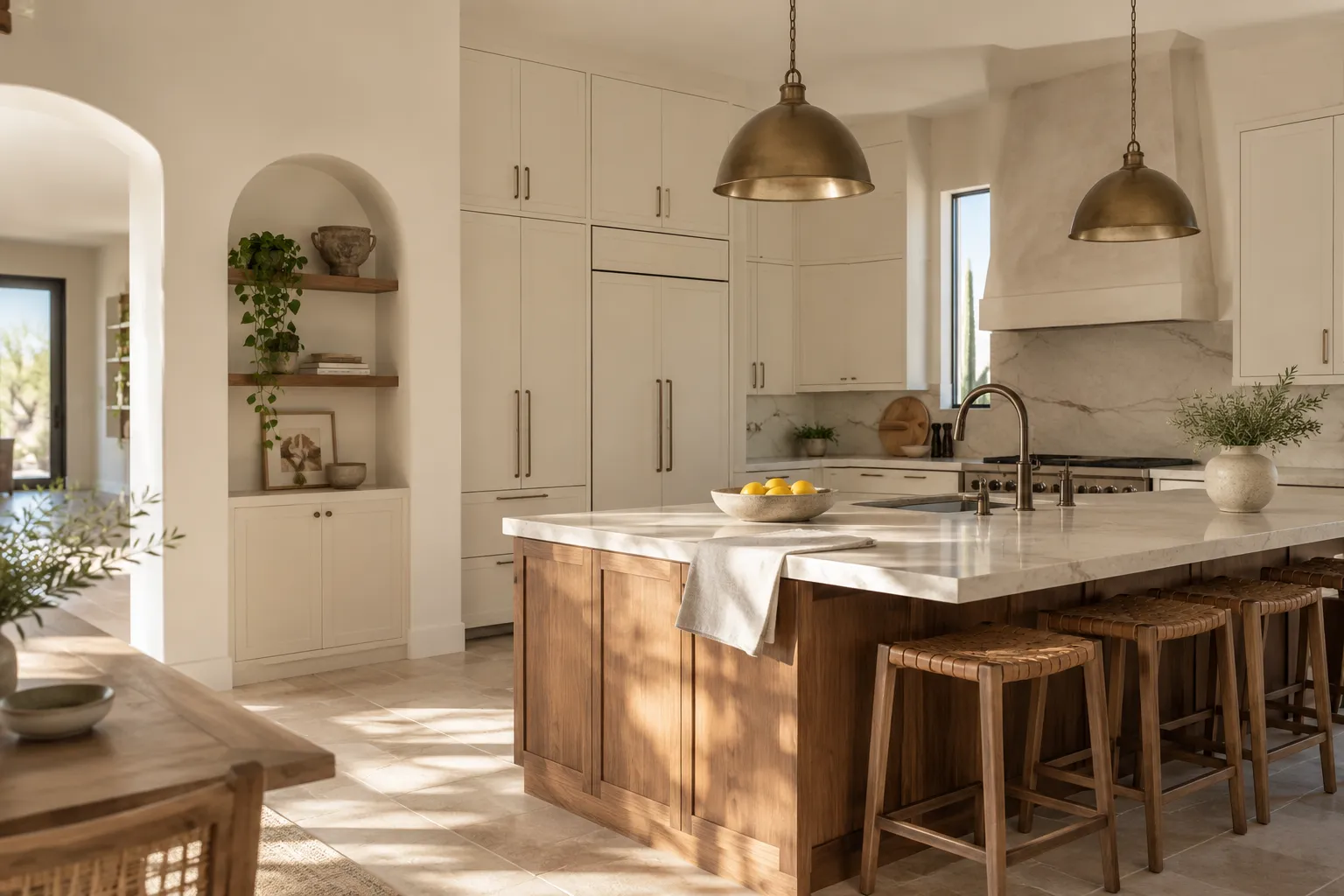
Butcher block is hardwood, usually maple, oak, or walnut, cut into staves and glued edge to edge into a solid slab. The finish is either oil that soaks into the wood or a film finish that sits on top. Oil-finished block is the version you can cut on and re-oil. Film-finished block is closer to a wooden countertop that happens to be made of butcher block.
Wood is not inert, and that is the point. It takes oil, takes knife marks as character, and gets sanded back to new when the surface gets tired. It also drinks water when it is thirsty, and it swells when it drinks, and a kitchen is full of water.
03Countertops
Quartz: what it actually is
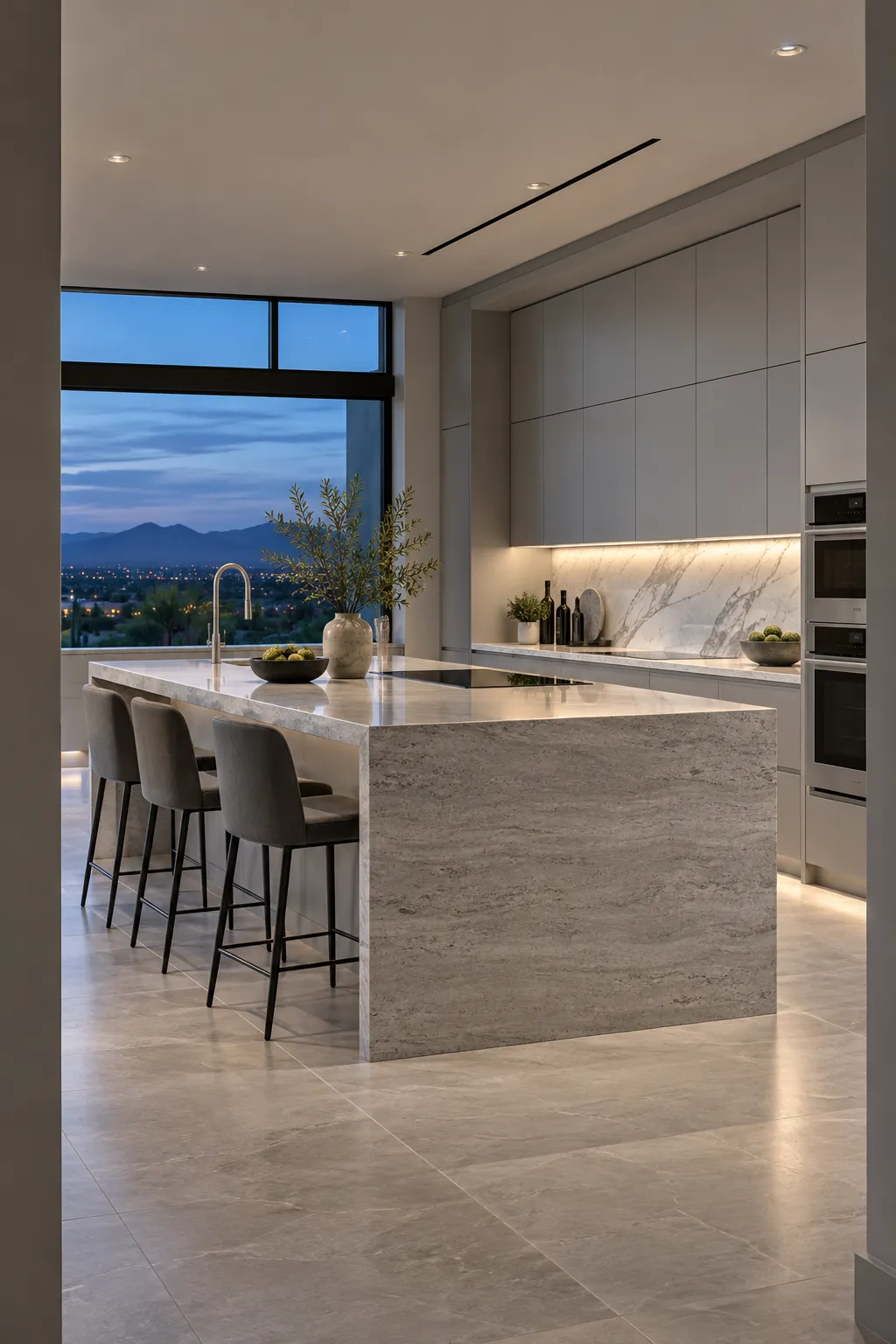
Quartz is engineered stone, crushed quartz bound in resin, pressed into slabs and cut to the kitchen. The surface is non-porous, it never needs sealing, and water, wine, and scale sit on top until wiped. The trade is heat: the resin binder scorches under a hot pan, so trivets are part of the deal. The other trade is that quartz cannot be sanded. When it is marked, it stays marked.
Quartz is also the predictable one. It does not move with the seasons, does not shrink in January, and does not swell in July. Around a Scottsdale sink, that stability is the whole argument.
04Good to know
Where butcher block fails here
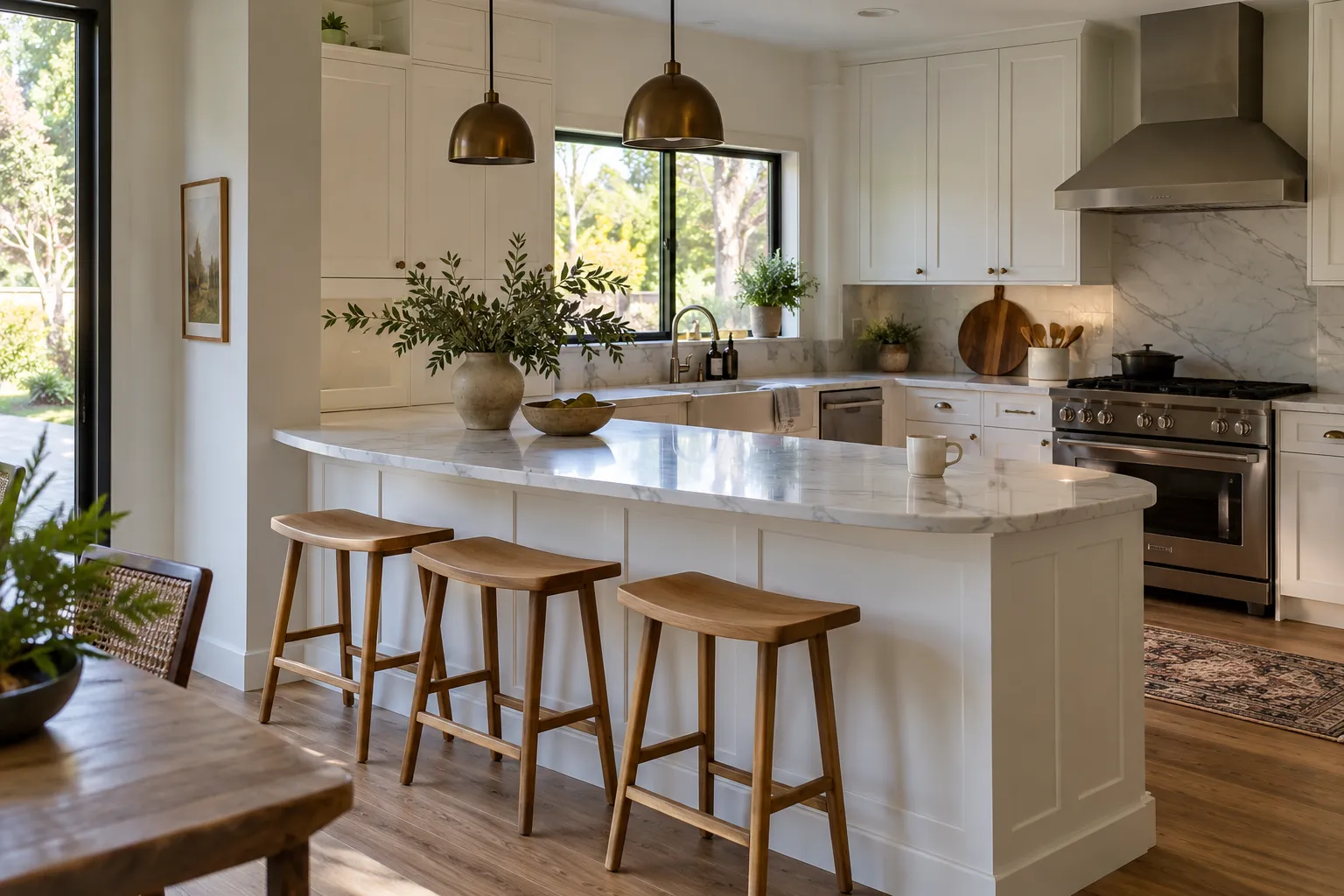
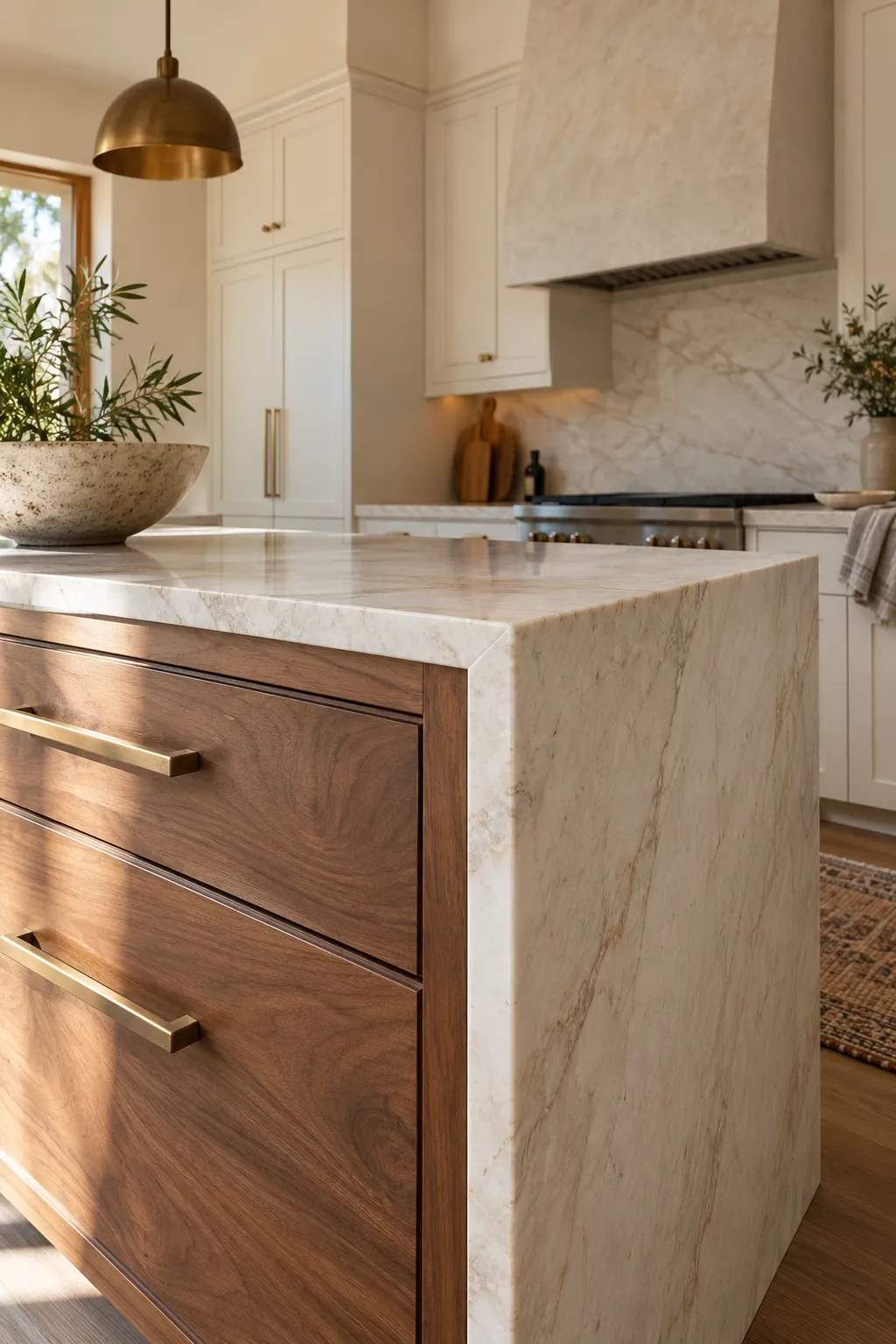
The seasons are the failure. Scottsdale winters pull the humidity down and the wood shrinks; the monsoon spikes it back up and the wood swells. A block top around a sink goes through that cycle twice a year, every year, and the joints around the sink cutout are where the movement concentrates. A gap opens, water finds the gap, and the wood darkens at the cutout. Once it darkens, it never matches again.
The sink is the second failure. Hard water means the faucet area is wet most of the day, and a block that goes unoiled sits thirsty at exactly the point where the water lives. The oil schedule is the honest cost of the material: monthly in the dry season, more often around the sink, and the schedule is the upkeep nobody keeps.
Heat is the third. A hot pan scorches the wood the same way it scorches quartz, except the wood can be sanded out and the quartz cannot. The difference is which of those two you will actually do. A house that sits closed up through the summer heat comes back to dry, opened joints, and that is a re-oil and a re-flatten, not a wipe.
The honest test for block is the week: if oiling the top is already on your Saturday list, the material works. If the Saturday list is already full, quartz is the surface you will actually maintain.
05Countertops
Where quartz fails here
Quartz fails on the hot pan, full stop. A kitchen with a high-end appliance load puts heavy pans down fast, and the resin binder scorches, and the scorch is permanent. The trivet rule is simple, but it is a rule, and it gets broken at the worst moments.
Hard water is the second, and it is minor. Scale left to dry on a dark quartz slab reads as dull patches, and the fix is soapy water and a soft cloth, done often. Nothing abrasive, because the polish is the surface. It is a daily wipe, not a monthly sanding.
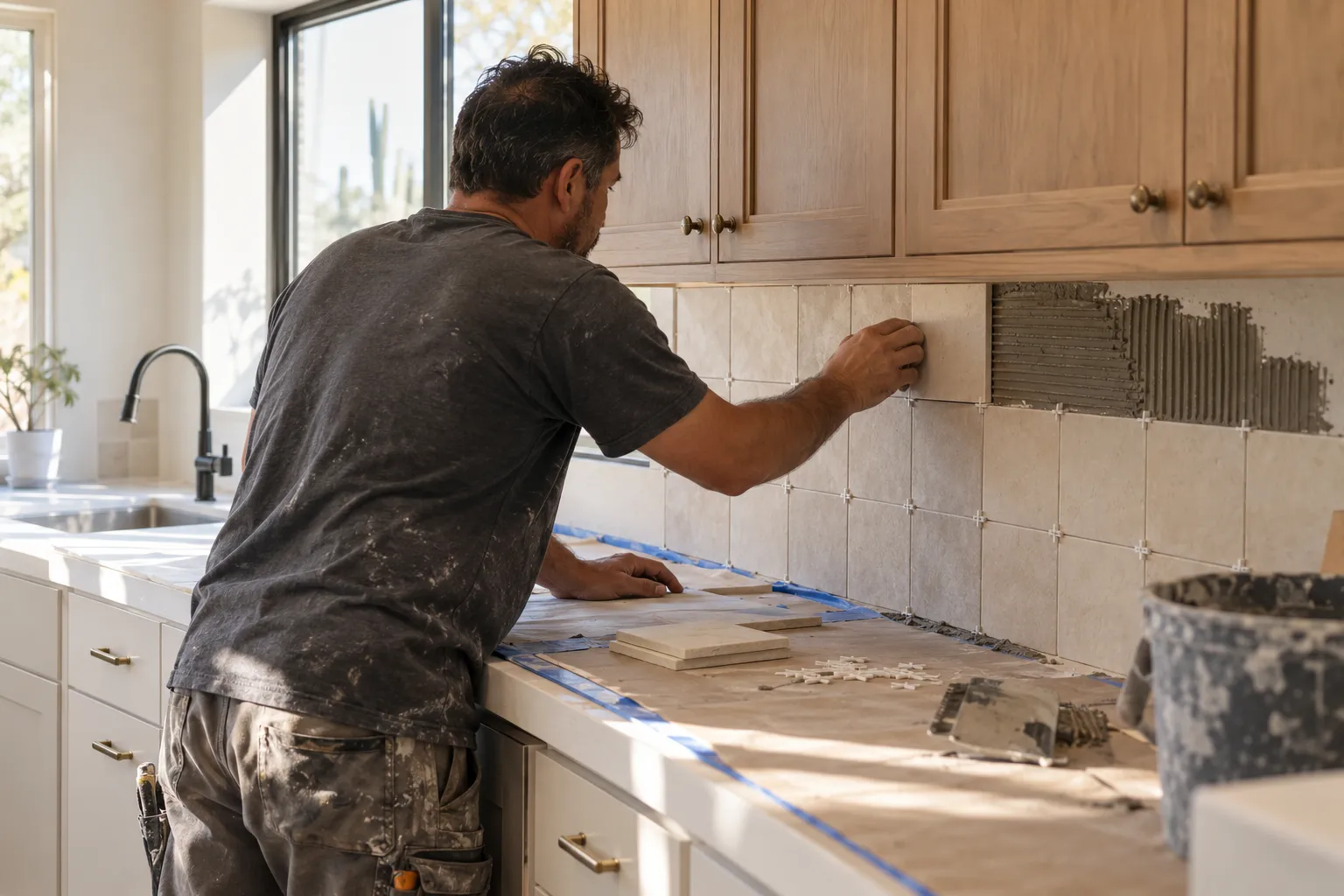
The third is the seam, and it is about order of work, not the material. If the top gets templated before the cabinets are set, the seam lands where the cabinets end up, not where the plan said. For the stone-to-stone comparison, read quartz vs granite, and if the budget is the question, laminate vs quartz is the honest step down.
06Costs
What it costs and what drives the number
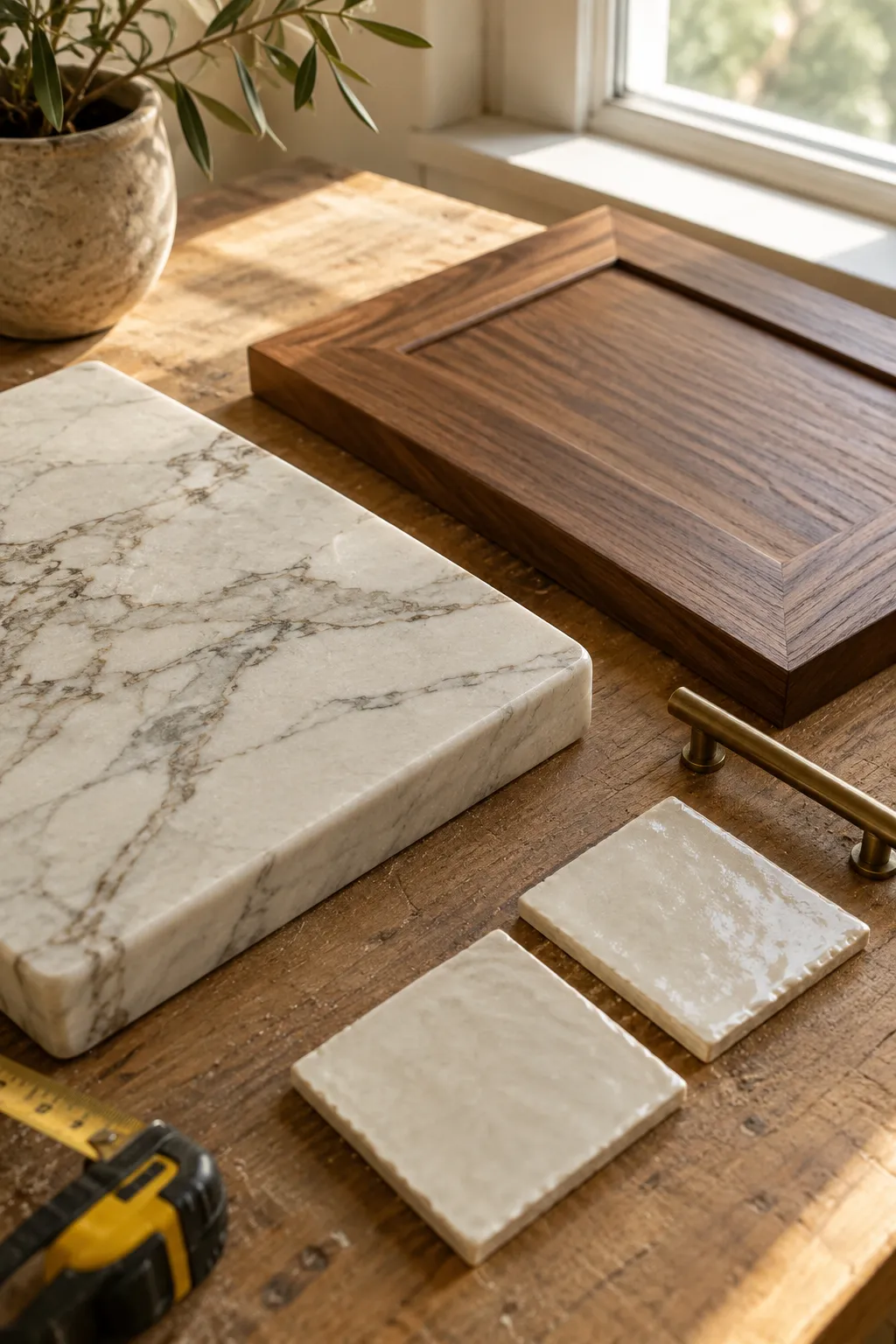
Butcher block runs less per square foot than quartz, and the money you save is time, because oiling is a schedule and sanding is an afternoon. Quartz costs more up front and asks for nothing after. The number on both moves with square feet, edge details, and the sink cutout, and a larger Scottsdale kitchen stretches both. The smart split a lot of kitchens land on is block on the island and stone on the perimeter, and that mix prices somewhere between the two. See what a kitchen remodel costs for where the counter line sits in the whole job, or start at the home page if the entire remodel is still an open question.
07Good to know
What good work looks like in Scottsdale
- An oil schedule matched to the dry season beats a brochure line about monthly oiling.
- The sink cutout edges get sealed before water ever reaches the joint.
- We are honest about which sections of the kitchen wood can survive and which it cannot.
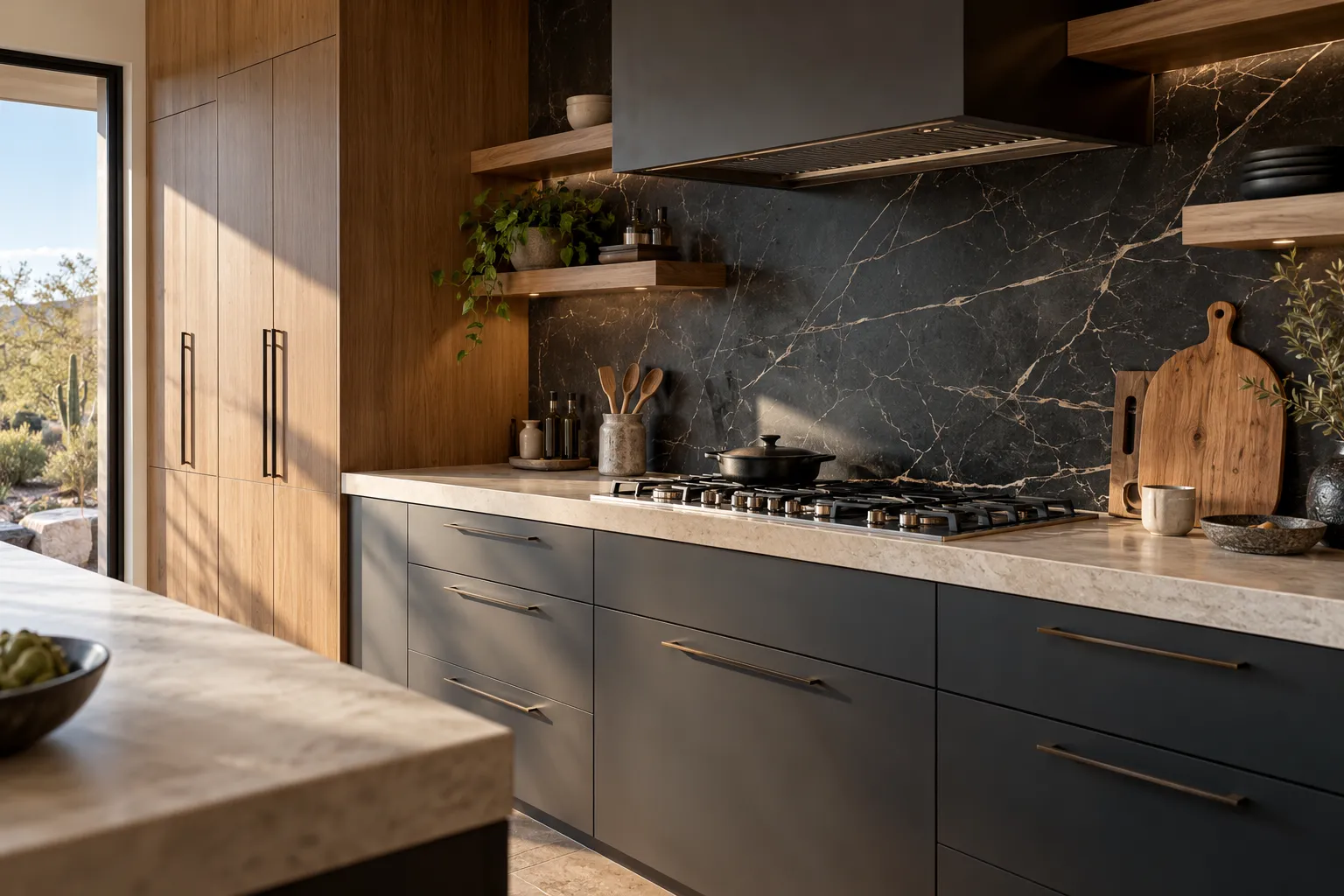
- The mix, block island and stone perimeter, is worth planning when it fits the budget better than either material alone.
If you are leaning toward stone, our kitchen countertops page covers quartz and granite.
086 questions
Butcher Block vs Quartz: your questions
Still have a question? Call (480) 672-2248 and describe the kitchen.
01Do I have to oil butcher block?
Yes, if it has an oil finish, and the schedule matters more in Scottsdale than the bottle says. The dry winter air pulls the oil out of the wood, and a thirsty block around a sink is the one that fails first.
02Can I cut directly on it?
On oil-finished block, yes, and the marks are part of the surface, then sanded out when they build up. On a film-finished block, no, you are cutting the finish, not the wood.
03Does butcher block hold up to water?
Only while it is oiled and the joints stay closed. Standing water at the faucet is the enemy, and hard water makes sure there is always standing water at the faucet. The sink cutout is where block dies or survives.
04Will the sun bleach the wood?
Yes, slowly, on the side that faces the window. The oil darkens and the sun lightens, and the two fight each other over years. It reads as warmth to some people and as unevenness to others.
05Which is better around a sink?
Quartz, without question. The sink is wet, the water here is hard, and stone ignores both. If you want wood at the sink, the cutout edges have to be sealed and the oil schedule has to actually happen.
06Which costs less?
Butcher block, on the material. The gap closes when you count the upkeep time, and the gap flips if the wood fails at the sink and has to be replaced. Price it both ways before you decide, and price the island-plus-perimeter mix while you are at it.