Guide 05 · 5 min read
Laminate vs Quartz Countertops in Scottsdale, AZ
Laminate is a printed sheet over particle board, cheap and fast, and water at a seam is how it dies. Quartz is engineered stone that costs several times more and lasts until you move. The right pick depends on the budget, the water, and how hard the kitchen gets used.
01Good to know
The short answer
Pick laminate if the number is the constraint, the kitchen is short-term or lightly used, and you accept the seam and heat rules. Pick quartz if you want one surface that shrugs off water, wipes clean from hard-water scale, and outlives the cabinets. In Scottsdale, the water at the sink and the sun at the window are what separate the two, more than the price tag does.
The right choice depends on the budget, the sink area, and how long you plan to live with it.
02Good to know
Laminate: what it actually is
Laminate is a decorative sheet, printed and textured, glued to a particle board core. The edge is either wrapped in the same sheet or capped with a strip, and the seams are where two pieces meet, usually at the corners and at the sink. It imitates stone, wood, or concrete from six feet away, and it costs a small fraction of the real thing.
The core is the weak point. Particle board is pressed wood fiber and resin, and it swells when water gets in. The surface sheet sheds water fine. The seam and the sink cutout are where water reaches the core, and once the core swells, the top lifts and the seam opens. There is no sanding that back out. The edge detail matters too. A wrapped edge follows the curve and looks softer; a mitered edge joins two sheets at a corner and looks sharper, and it is the miter that opens first when the core moves.
03Countertops
Quartz: what it actually is
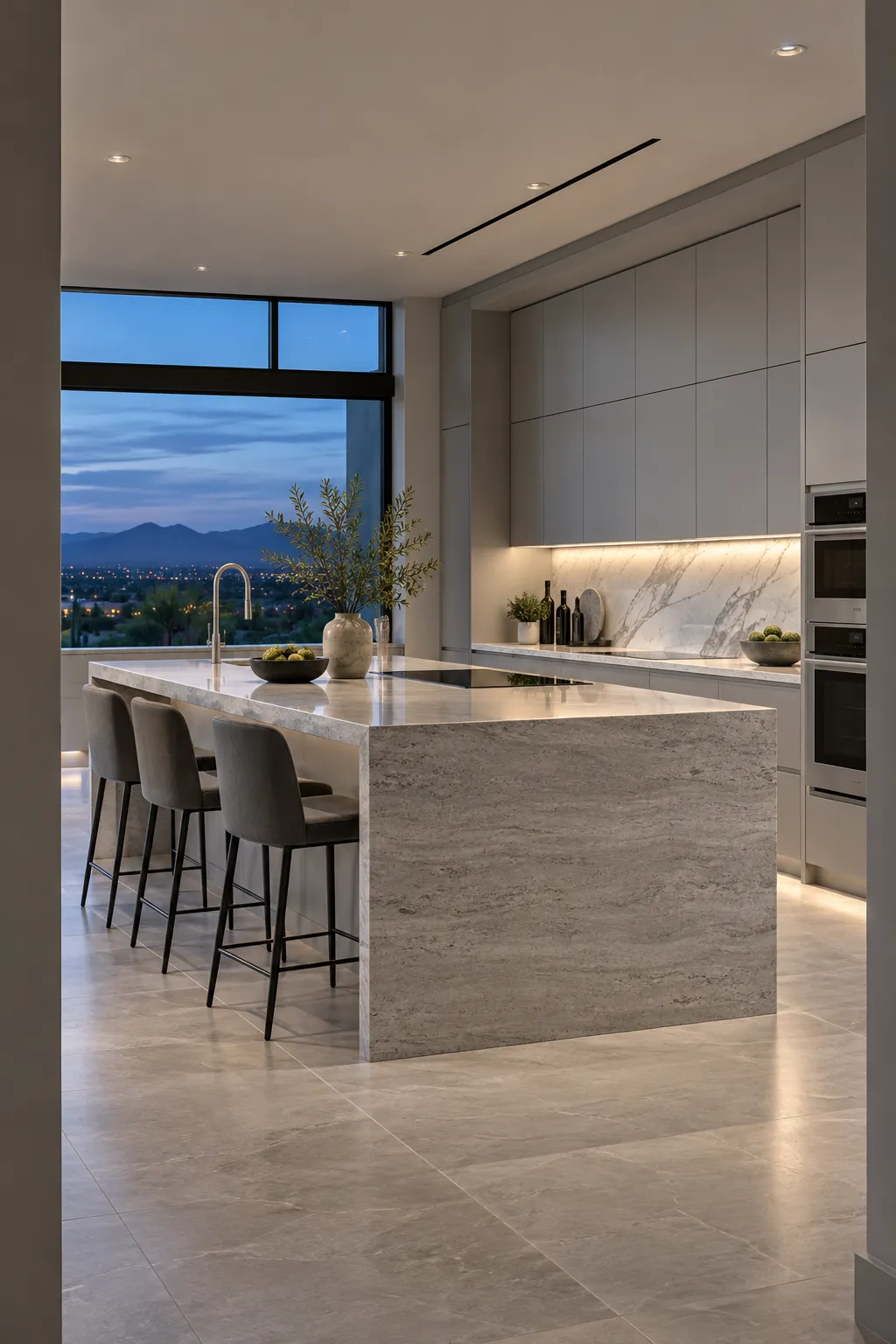
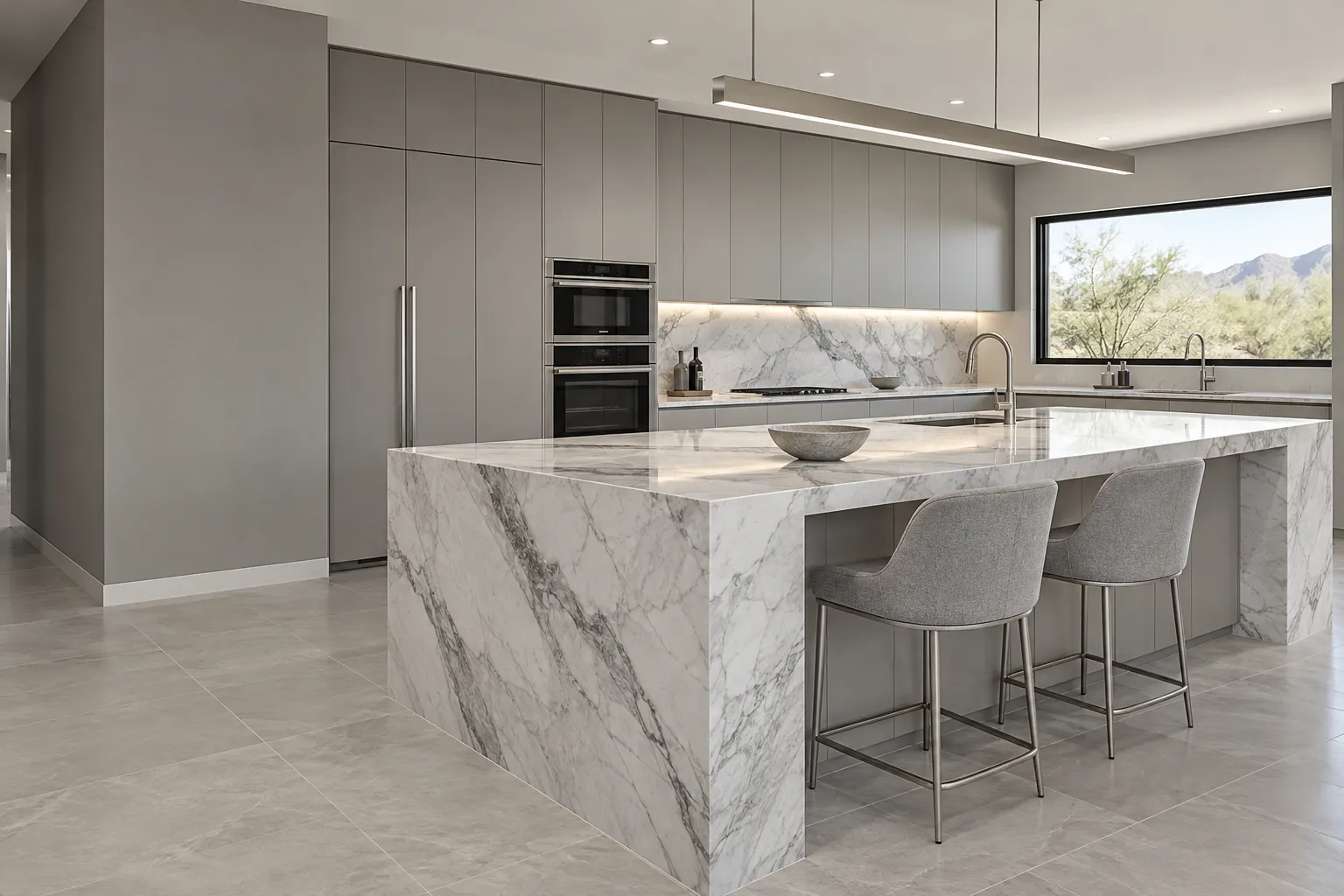
Quartz is engineered stone: crushed quartz bound in resin, pressed into slabs, cut to your kitchen, and seamed in place. The surface is non-porous, it never needs sealing, and it holds up to water, wine, and daily use without a thought. The trade, as on any engineered stone, is heat. A hot pan straight off the burner can scorch the resin, and the mark is permanent.
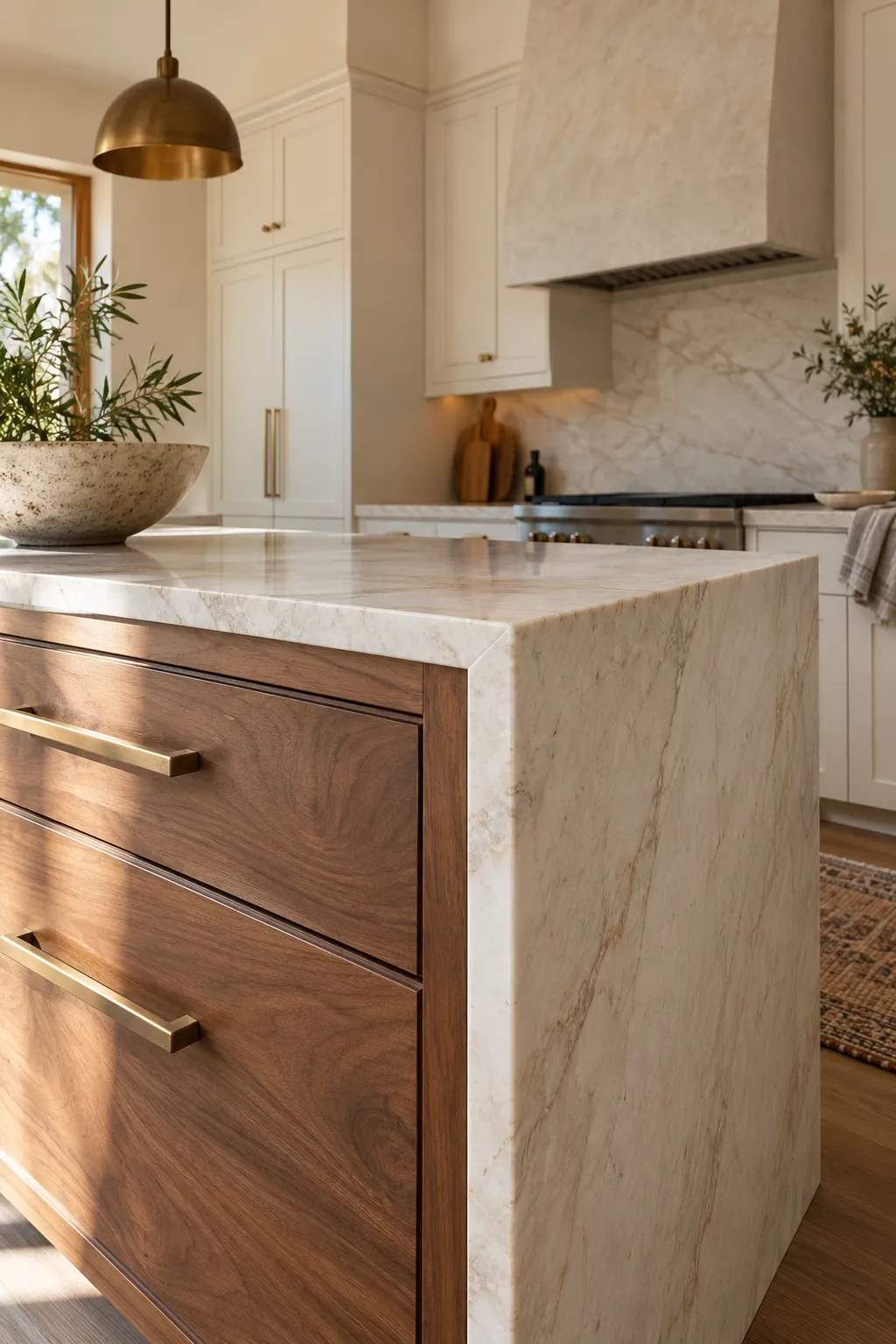
The other practical difference is weight and schedule. Quartz is heavy, the base cabinets have to carry it, and it gets templated after the cabinets are set, then cut, then installed. It is a measured, templated material, not a sheet off a roll. On a big island, that weight also decides the overhang: too long an unsupported overhang and the stone wants to flex, so the supports get planned before the slab is cut, not after it lands.
04Good to know
Where laminate fails here
The sink is where Scottsdale kills laminate. Hard water means the faucet and the counter around it spend their lives wet, and a faucet that drips even slightly feeds the seam. Add the monsoon's humidity spikes and the particle board core takes water at the cutout, swells, and the seam opens. Once the edge lifts, it never closes.
Heat is the second failure. A kitchen with a high-end appliance load puts hot pans down fast, and laminate under a hot pan scorches and peels. The printed pattern does not heal, and the scorch is permanent. The third is the sun. A laminate top near a south-facing window line fades, the printed pattern goes chalky, and the part of the counter in the light no longer matches the part in the shade.
The one place laminate wins is replaceability. When the top does fail, tearing out a laminate top is cheap and fast compared to pulling stone, and that is exactly why it shows up in short-term kitchens. It is also the material that asks nothing of the cabinets underneath, which matters when the boxes are old and the budget is spoken for.
05Countertops
Where quartz fails here
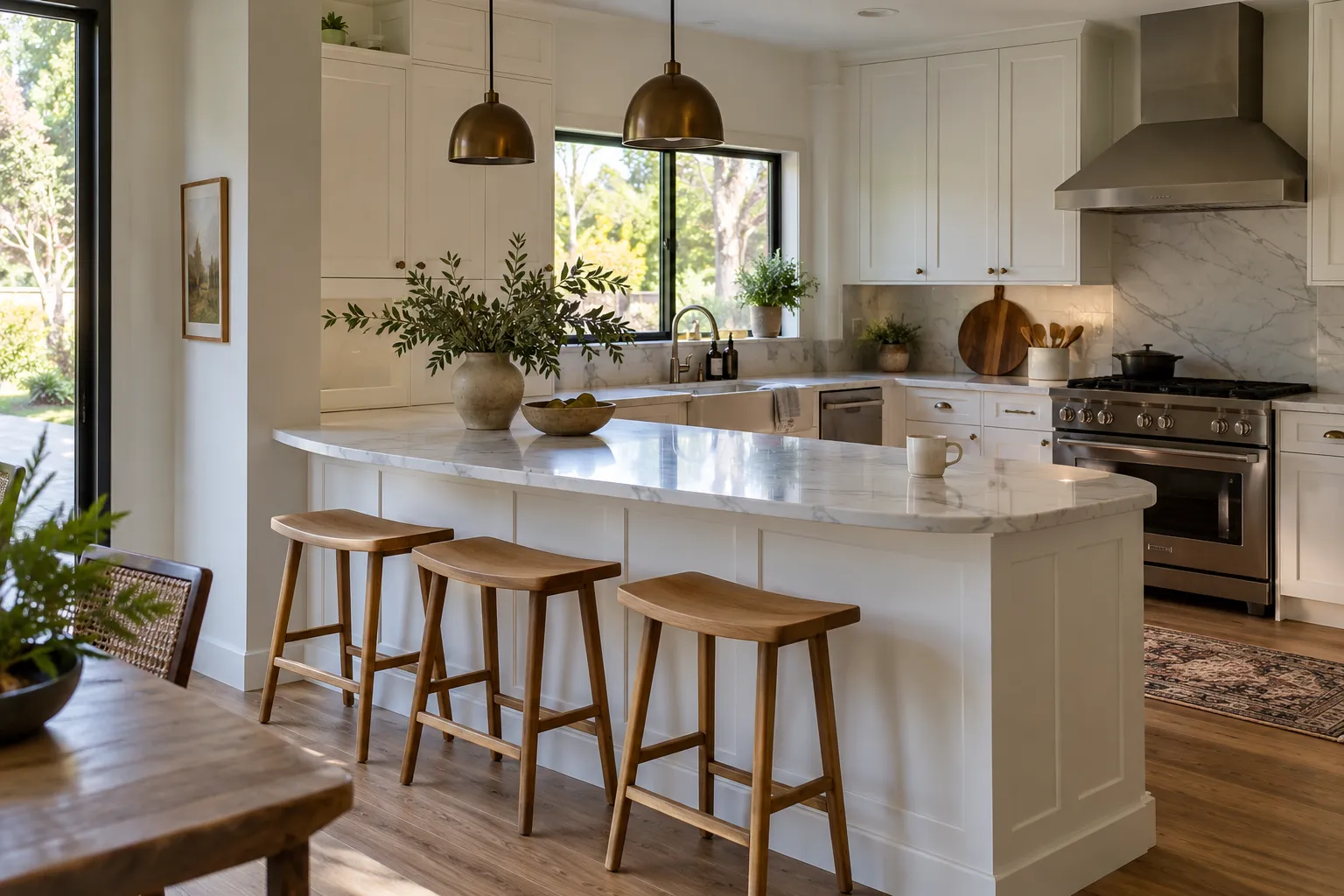
The number is the first failure. A larger Scottsdale kitchen means more square feet, more seams, and a heavier slab, and quartz costs several times what laminate does. The cabinets have to carry the weight, and older boxes with particle board sides sometimes need reinforcement before the stone goes down.
Heat is the second. The resin binder scorches under a hot pan the same way laminate does, and quartz owners learn the trivet rule the hard way. Hard water is the third: quartz wipes clean, but scale left to dry on a dark slab shows as dull patches, and the fix is soapy water and a soft cloth, done often, not an abrasive pad. The care is easy. It is not zero, and around a Scottsdale faucet it is a daily habit, not a monthly one.
The seam is the last one, and it is about the order of work. If the tops get templated before the cabinets are set, the seam lands where the cabinets end up, not where the design said it would. Read quartz vs granite for the seam and heat tradeoffs against natural stone, or butcher block vs quartz if wood is the direction you are leaning.
06Costs
What it costs and what drives the number
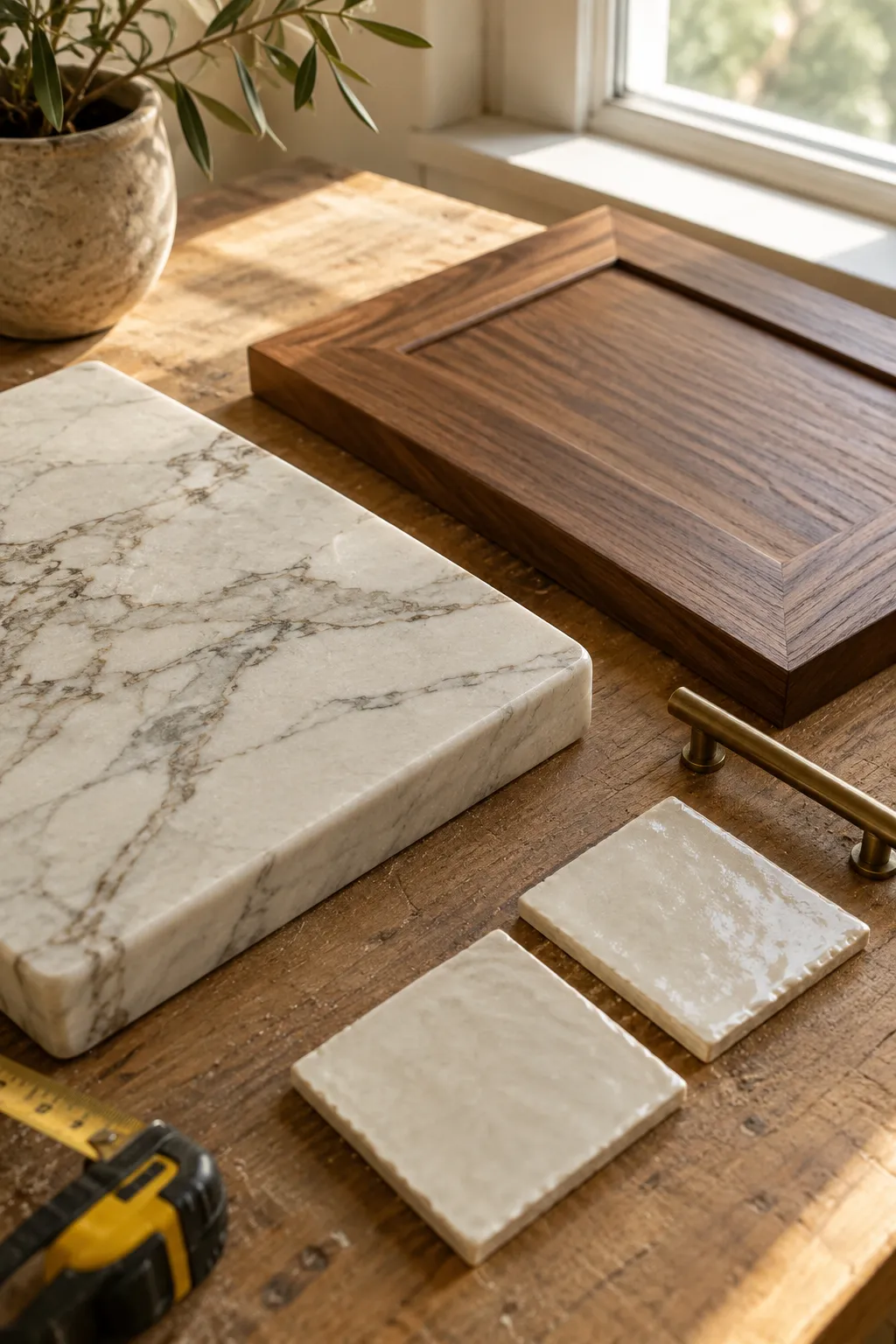
Laminate is the cheapest surface you can put in, and the number moves with the square feet, the edge style, and the number of miters. Quartz runs several times that, and its number moves with the slab, the edge profile, the sink cutout, and the seams. Neither number is fixed. The gap between them varies with the kitchen, and the honest question is how long the top has to live. For the whole budget picture, start with what a kitchen remodel costs, or begin at the home page if you are still deciding what the remodel should include.
07Good to know
What good work looks like in Scottsdale
- The template happens only after the cabinets are set, never before.
- The cabinet support gets checked before a heavy slab goes down.
- Which rooms laminate actually fits, and which it will not survive, deserves an honest talk.
- The hard-water care line for quartz keeps the surface what you paid for.
If you are ready to compare surfaces for your own kitchen, our kitchen countertops page covers quartz and granite.
086 questions
Laminate vs Quartz Countertops: your questions
Still have a question? Call (480) 672-2248 and describe the kitchen.
01Does laminate look like real stone?
From across the room, the better prints do. At the seam and the sink cutout, up close, it does not. The seam is the tell, and the seam is also where laminate fails.
02Does laminate burn?
It scorches and peels under a hot pan, and the mark is permanent. Trivets are not optional with laminate.
03Is quartz much heavier than laminate?
Yes, and the cabinets have to carry it. Support gets checked before the slab goes down, and old particle board boxes sometimes need reinforcement first.
04Do I have to seal quartz?
No. Quartz is non-porous and never needs sealing. The upkeep is wiping it down, especially around the faucet where hard water leaves scale.
05Which handles hard water better?
Quartz, by a wide margin. The surface itself is waterproof, and scale wipes off with soapy water. Laminate fails at the seams, and the sink area is exactly where the water lives.
06Which one makes sense in a rental?
Laminate, usually. The math favors the cheaper surface when someone else is cooking on it and the top only has to last one tenant. In a kitchen you plan to keep for a decade, quartz starts winning, because the water at the sink and the heat at the range are the same either way, and only one of these materials is still flat after ten summers.