Guide 07 · 5 min read
Quartz vs Granite Countertops in Scottsdale, AZ
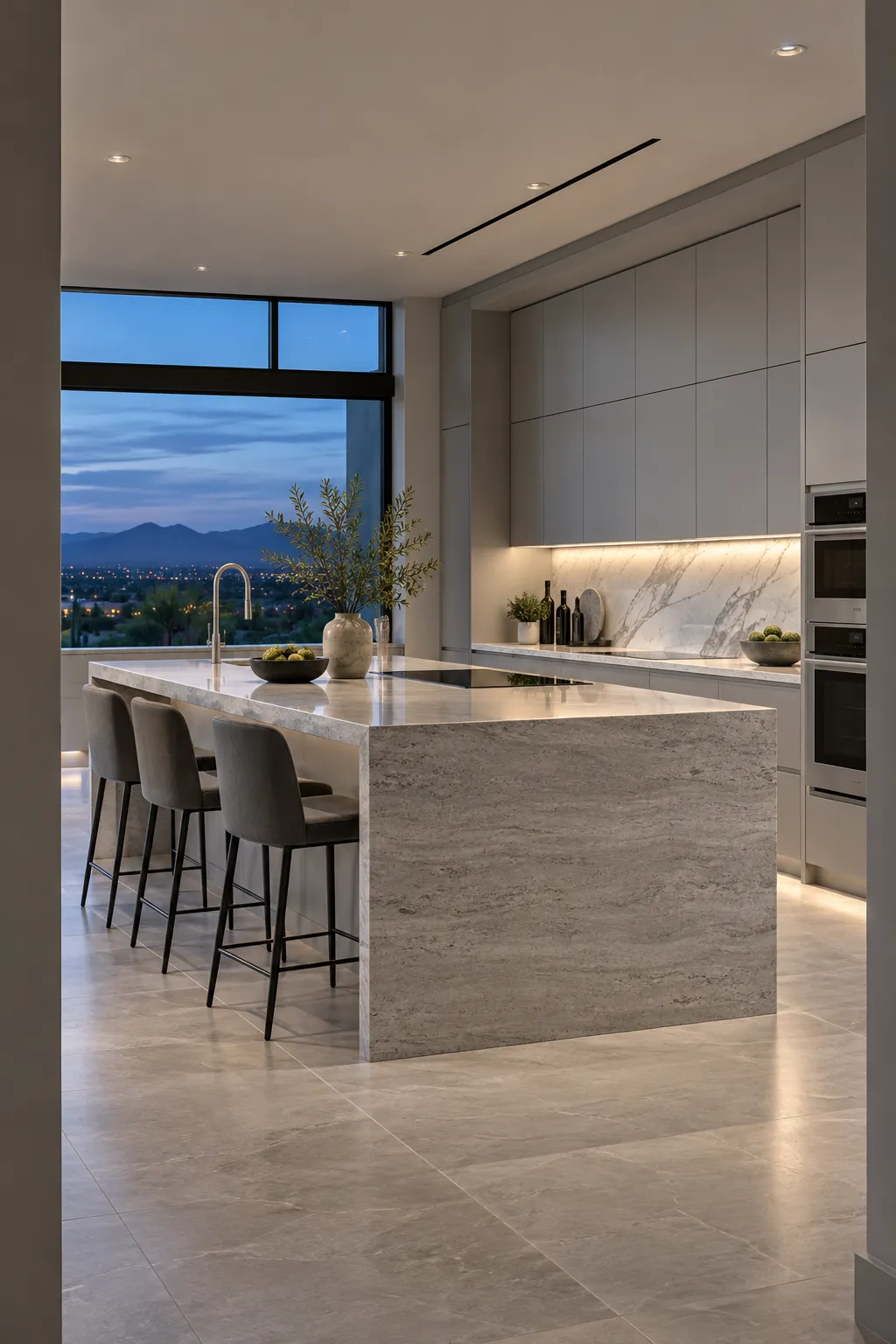
Quartz is engineered stone that never needs sealing and scorches under a hot pan straight off the burner. Granite is natural stone that shrugs off heat and needs sealing on a schedule. Which one fits depends on how you cook, where the sun lands, and how the seams run.
01Good to know
The short answer
Pick quartz if you want one surface that stays sealed on its own and looks like the sample every time. Pick granite if you set hot pans straight on the counter, want a stone that is one of a kind, and do not mind resealing it now and then. In Scottsdale, hard water and the sun push both materials in ways the showroom pitch does not mention.
The right choice depends on the slab, the seams, and where the afternoon sun lands in your kitchen.
02Countertops
Quartz: what it actually is
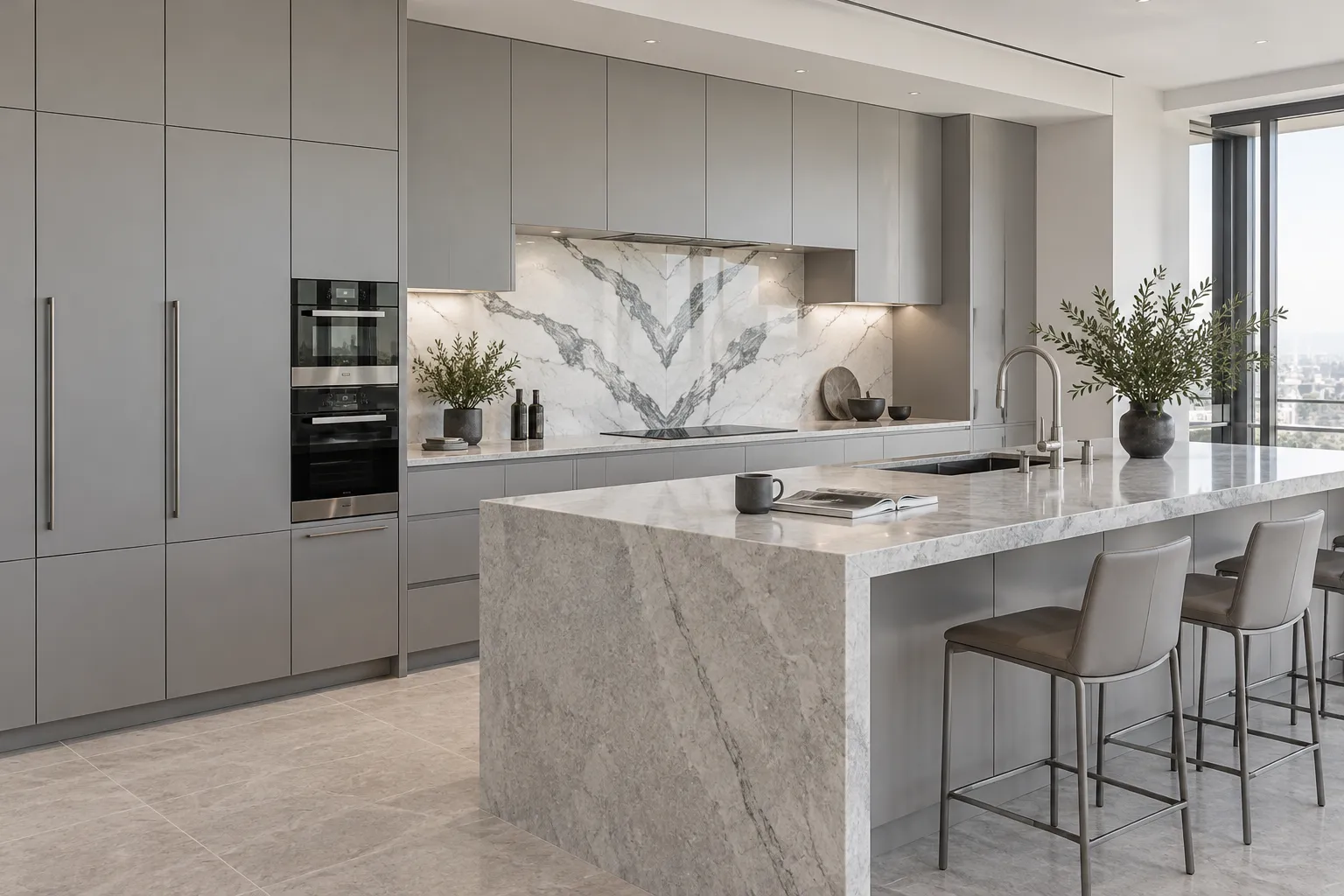
Quartz countertops are engineered. Mostly crushed quartz gets bound in resin, pressed into slabs, and polished. Because it is manufactured, the color is consistent from slab to slab, the surface is non-porous, and nothing ever gets sealed. Seams between pieces blend tighter than they do in natural stone.
The resin binder is the weak point. It is temperature-sensitive, and a hot pan or a hot baking sheet set straight off the burner can scorch or discolor the surface. The mark does not sand out the way it does in natural stone. Heat tolerance is the trade you make for the non-porous surface.
Manufactured consistency is the other half of the deal. Two slabs ordered months apart match each other, which matters when a large island top has to be cut from more than one slab, and it matters again if a piece ever gets replaced later. Quartz also shows less of the day-to-day mess. Flour, coffee, wine, a hot afternoon of cooking, all of it wipes off a non-porous surface without a trace, and that is the honest reason families with a live-in kitchen pick it.
03Countertops
Granite: what it actually is
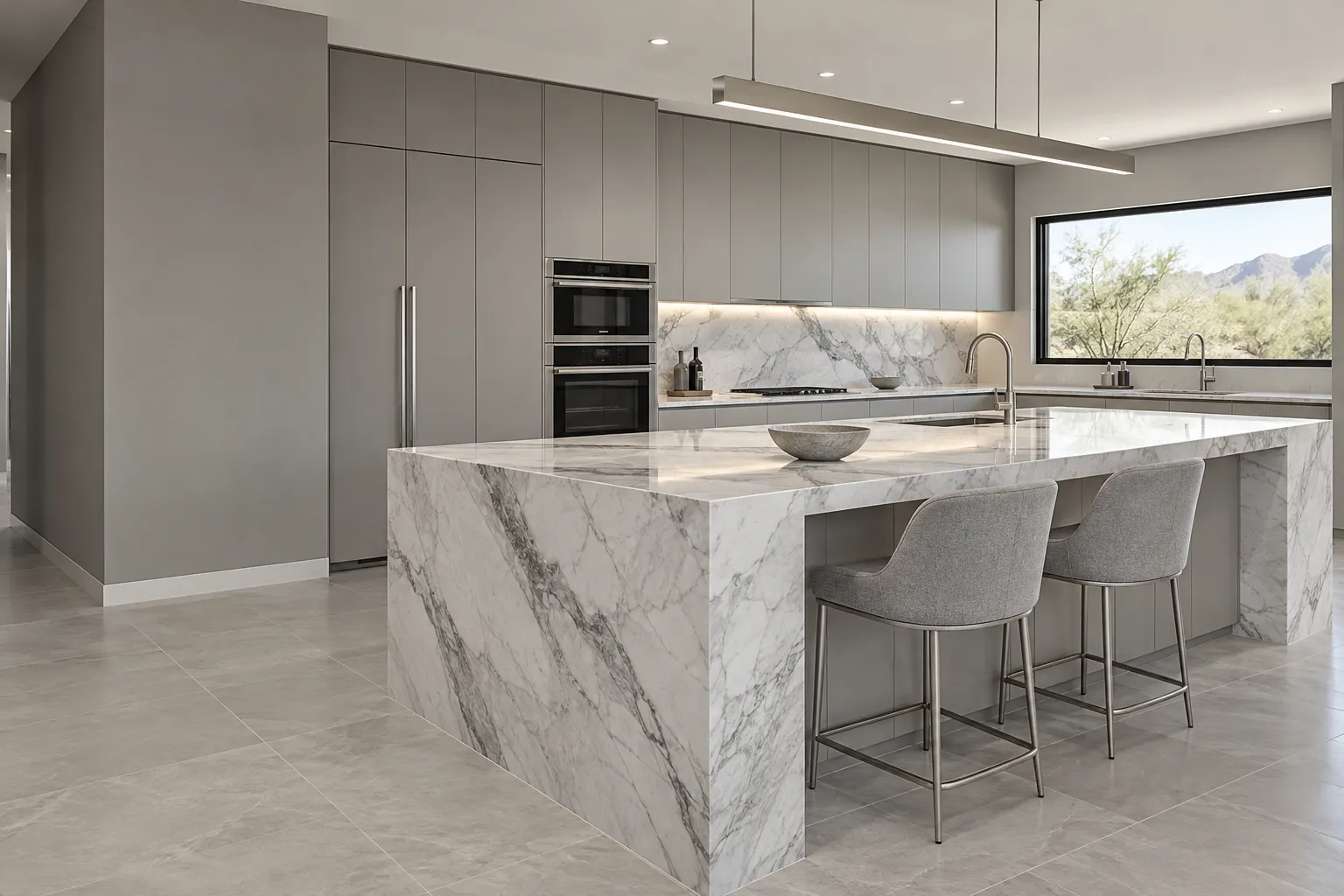
Granite is quarried stone, cut into slabs and polished. No two slabs are alike. The veining, the movement, the mineral speckle, all of it is one of a kind, and the slab you approve is the one that gets cut.
Granite is porous at a microscopic level. Oil and wine can soak in if they sit, and that is why it gets sealed, and resealed, on a schedule that varies with how hard the kitchen gets used. What you gain is heat tolerance. A hot pan on granite is a non-event, and a top next to a big range is a natural place to rest one. Edge profiles and corners are where granite chips when a heavy pot swings into them, and a chip in polished granite is visible until it is filled. The fill never quite disappears.
04Countertops
Where quartz fails here
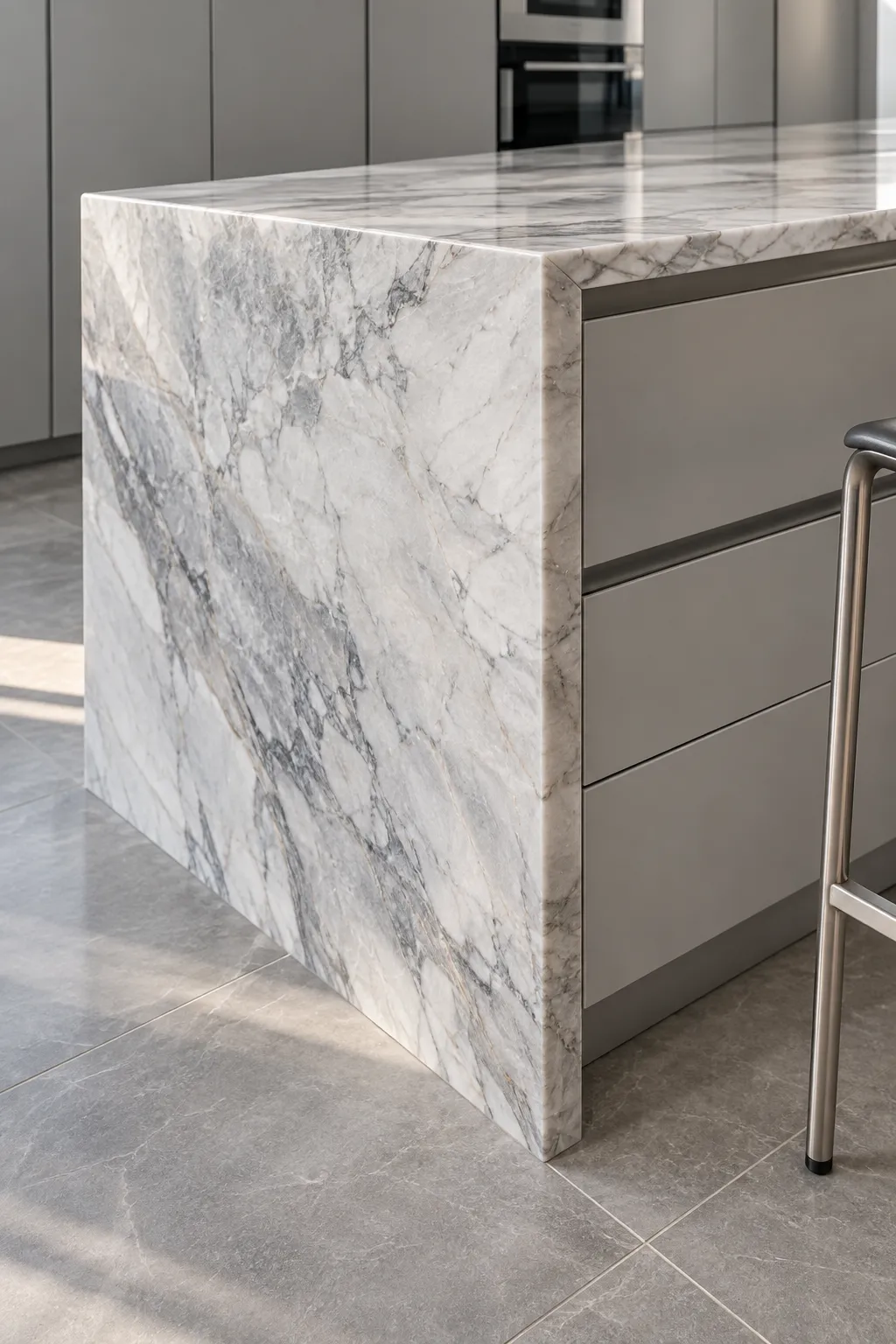
Scottsdale kitchens carry a high-end appliance load, and that is where quartz gets hurt. Big ranges mean heavy cast iron and steel pans that come off the burner screaming hot. That pan, set down on the island because there is nowhere else to put it, is how the resin scorches. The scar is permanent.
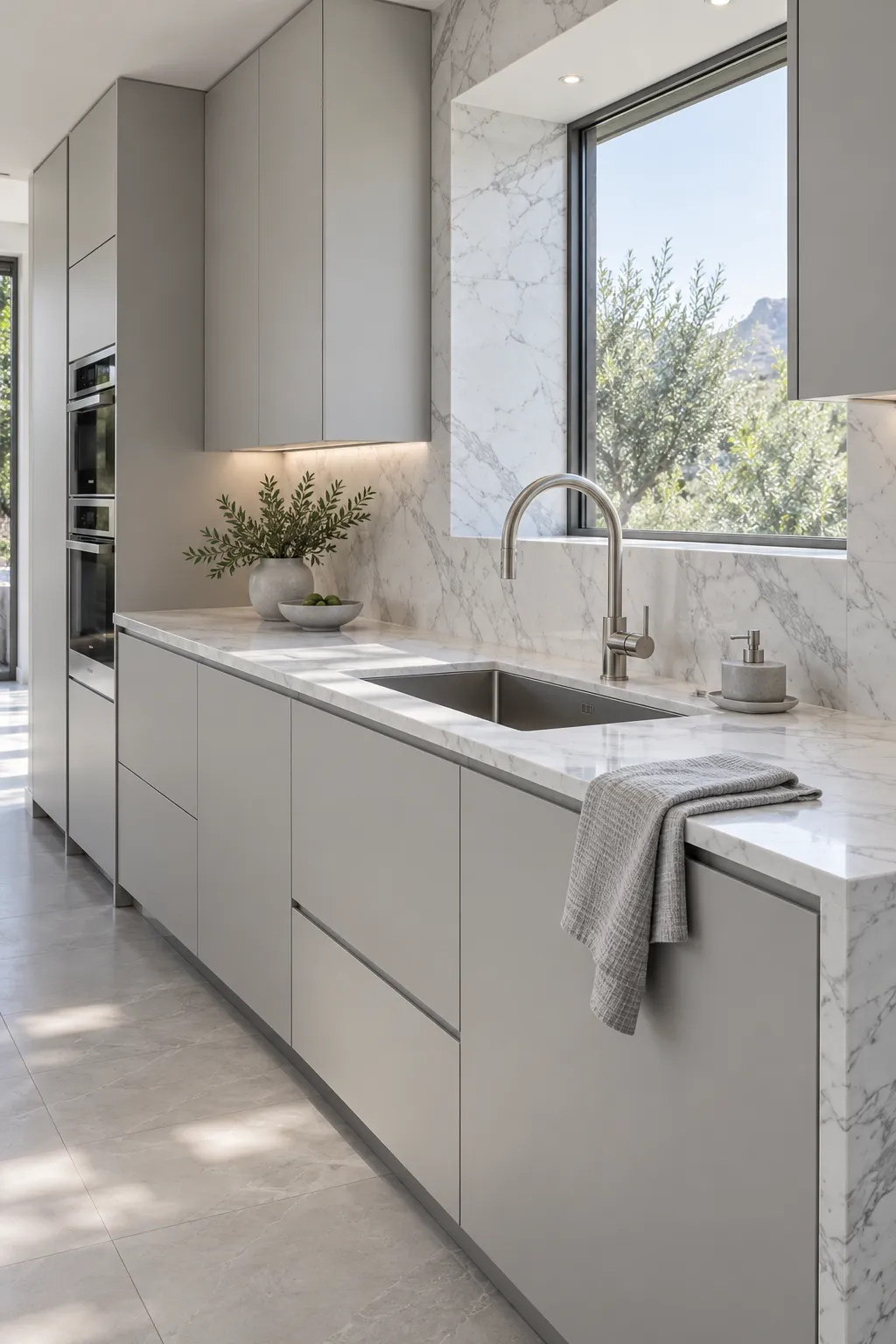
The sun gets a vote too. A south-facing window line heats a dark quartz top well above air temperature through the summer, and the resin binder is the part that notices. Quartz does not fade in the sun the way laminate does, but heat is heat. Light colors hide scale better, and that is one more reason the color choice and the material choice are the same decision.
Then there is hard water. Quartz does not etch the way marble does, but the scale builds at the faucet just the same. White film on a dark slab is the tell. The fix is soapy water and a soft cloth, done often, not an abrasive pad once a year. Hard water left to dry on dark quartz reads as dull patches, and the first instinct, scrubbing with anything gritty, dulls the polish for good. Read the butcher block vs quartz page if you want the other end of the upkeep scale.
05Countertops
Where granite fails here
Sealing is the upkeep people skip, and Scottsdale does not exempt you from it. A busy cooktop means oil, wine, and citrus somewhere on the stone, and an unsealed or long-expired seal is an invitation. The reseal schedule varies with use, and nobody writes it on the calendar.
Hard water scale lands on polished dark granite near the faucet the same way it lands on quartz, and it shows. The difference is that granite also wants its sealer maintained, so the upkeep is two jobs, not one.
The slab itself is the last failure. You buy the slab, not the sample on the wall. Larger Scottsdale kitchens mean long runs and big islands, and seam placement is the design decision that shows most. Two slabs from the same quarry can look like different stone, and a seam cut in the wrong place is visible every day. None of this is a reason to avoid granite. It is the reason to treat the slab pick and the seam plan as decisions, not afterthoughts.
06Costs
What it costs and what drives the number
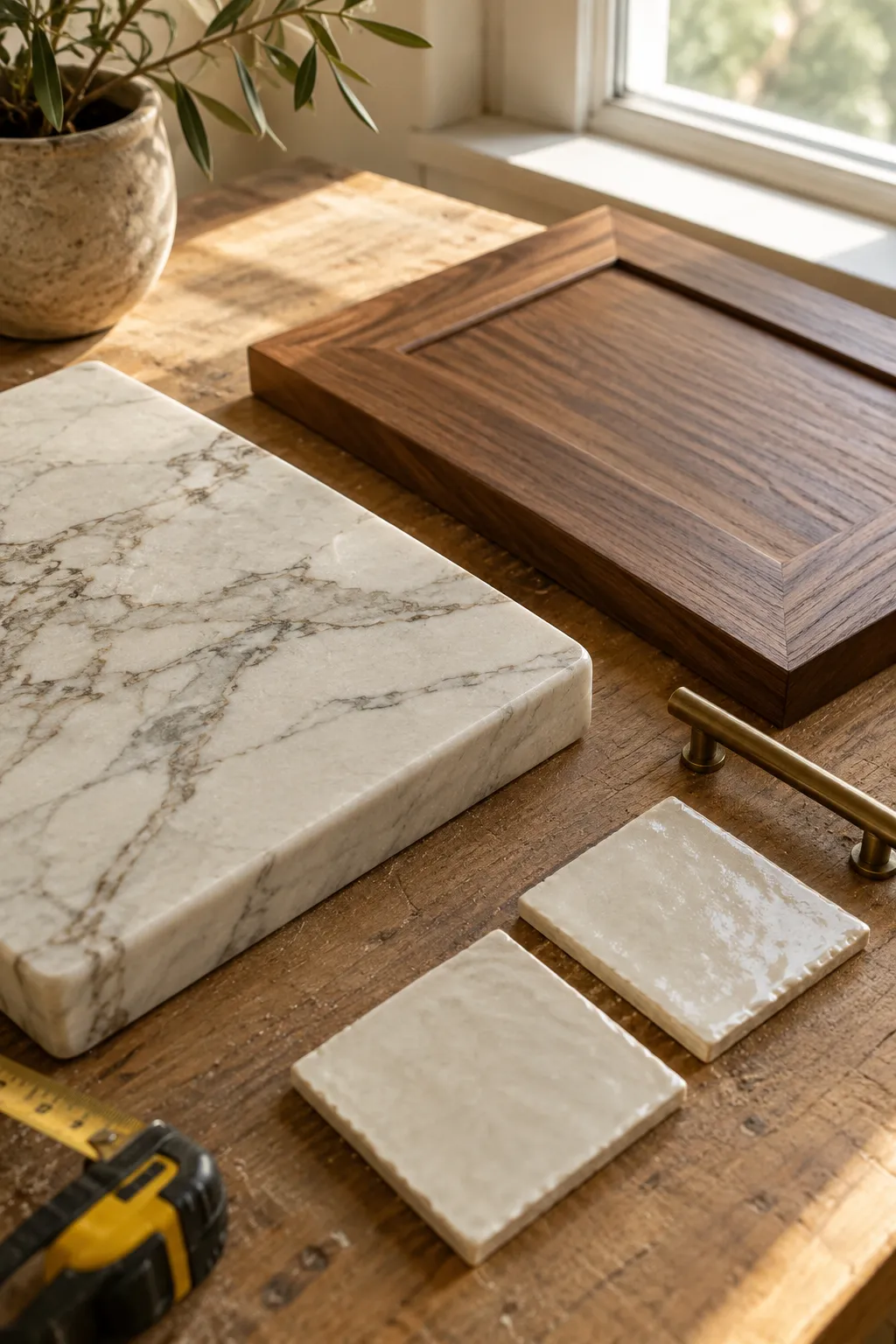
Both materials move with square footage, edge profile, sink cutout, and seams. Quartz lands in a predictable band because the product is manufactured. Granite swings with the stone, and rare slabs cost multiples of common ones. A larger kitchen means more square feet and more seams either way. Edge profiles, the sink cutout, and the seams all price per piece, and a larger Scottsdale kitchen stacks all three. The number varies with the slab you pick, not just the material name. If quartz lands above the budget, read laminate vs quartz for the honest step down. For where the countertop line sits in the whole job, see what a kitchen remodel costs, and for the wider scope, kitchen remodeling in Scottsdale is the overview. Start at the home page if you are still deciding where to begin.
07Good to know
What good work looks like in Scottsdale
- The exact slab matters, not the sample on the wall.
- Seams on long runs get planned before the slab is cut.
- Overhangs and support get sized for big islands.
- A hard-water care routine keeps the surface looking the way it did on install day.
086 questions
Quartz vs Granite Countertops: your questions
Still have a question? Call (480) 672-2248 and describe the kitchen.
01Does quartz burn?
The resin binder can scorch under a hot pan straight off the burner, and the mark is permanent. Use trivets and it will never come up. Granite takes the same pan without complaint.
02Does granite stain?
Only if it absorbs something before it gets sealed, or after the sealer has worn off. Oil is the usual culprit. Keep the reseal schedule and stains stay on the surface, where a wipe removes them.
03Which one needs sealing?
Granite, on a schedule that varies with use. Quartz never needs sealing. That single difference is why a lot of people pick quartz and why a lot of people pick granite anyway.
04Is quartz really non-porous?
The surface is non-porous, which is why it does not need sealing and why water and wine sit on top until wiped. The resin binder is the part that gives up heat tolerance, not porosity.
05Which handles Scottsdale's sun better?
Granite does not care about heat from the window line. Quartz will not fade, but a dark quartz top in direct afternoon sun runs hot, and hot is the resin binder's weak point.
06Which costs more?
It varies with the stone. Quartz sits in a predictable band. Granite runs from common and affordable to rare and expensive, and the slab you pick decides where you land. Get the slab price and the fabrication price in the same quote, because the gap between them is where surprises live.